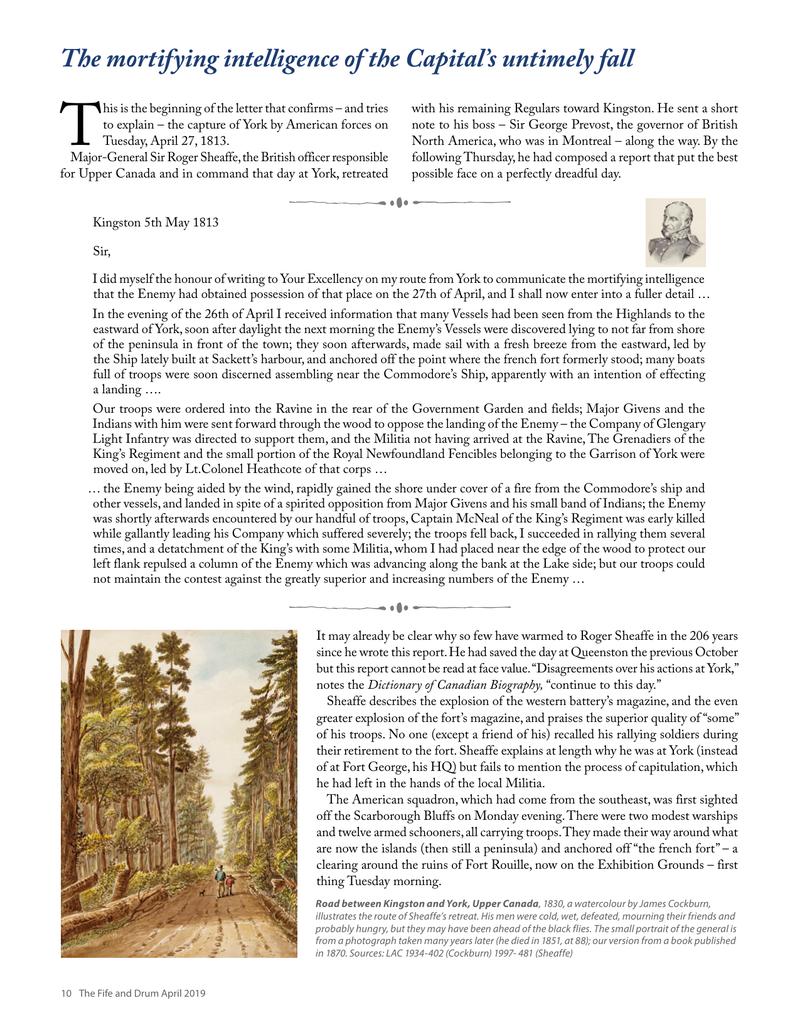
This is the beginning of the letter that confirms – and tries to explain – the capture of York by American forces on Tuesday, April 27, 1813.
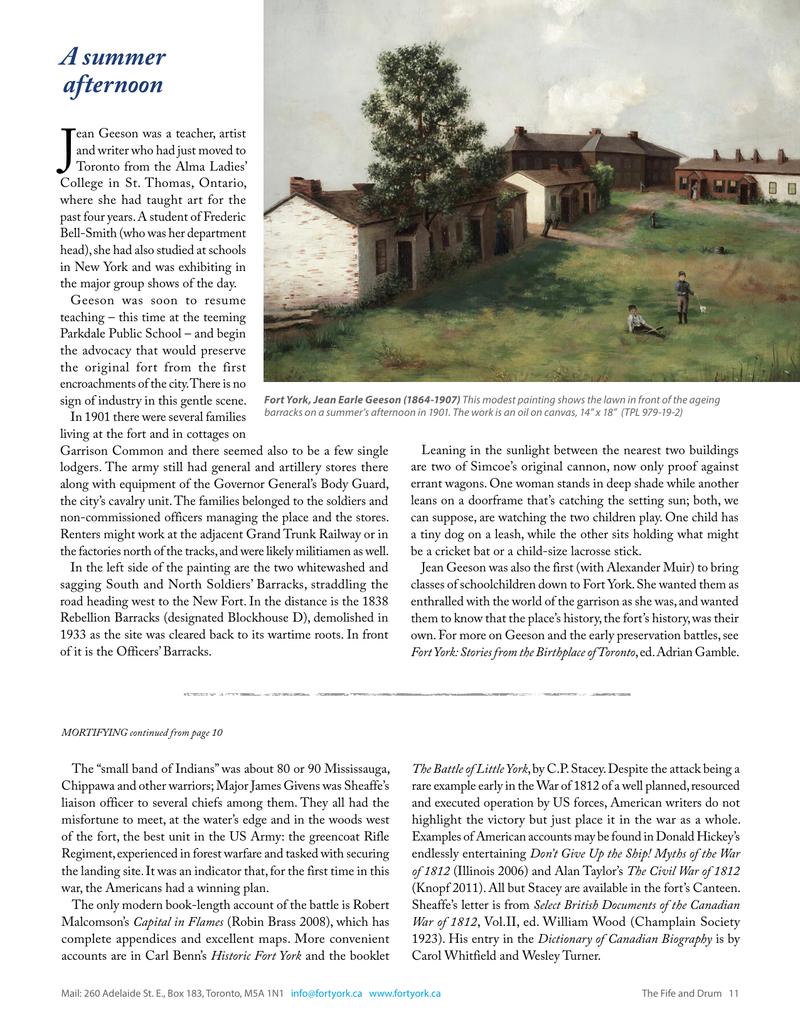
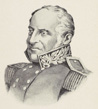
Major-General Sir Roger Sheaffe, the British officer responsible for Upper Canada and in command that day at York, retreated with his remaining Regulars toward Kingston. He sent a short note to his boss – Sir George Prevost, the governor of British North America, who was in Montreal – along the way. By the following Thursday, he had composed a report that put the best possible face on a perfectly dreadful day.
Kingston 5th May 1813
Sir,
I did myself the honour of writing to Your Excellency on my route from York to communicate the mortifying intelligence that the Enemy had obtained possession of that place on the 27th of April, and I shall now enter into a fuller detail …
In the evening of the 26th of April I received information that many Vessels had been seen from the Highlands to the eastward of York, soon after daylight the next morning the Enemy’s Vessels were discovered lying to not far from shore of the peninsula in front of the town; they soon afterwards, made sail with a fresh breeze from the eastward, led by the Ship lately built at Sackett’s harbour, and anchored off the point where the french fort formerly stood; many boats full of troops were soon discerned assembling near the Commodore’s Ship, apparently with an intention of effecting a landing ….
Our troops were ordered into the Ravine in the rear of the Government Garden and fields; Major Givens and the Indians with him were sent forward through the wood to oppose the landing of the Enemy – the Company of Glengary Light Infantry was directed to support them, and the Militia not having arrived at the Ravine, The Grenadiers of the King’s Regiment and the small portion of the Royal Newfoundland Fencibles belonging to the Garrison of York were moved on, led by Lt.Colonel Heathcote of that corps …
… the Enemy being aided by the wind, rapidly gained the shore under cover of a fire from the Commodore’s ship and other vessels, and landed in spite of a spirited opposition from Major Givens and his small band of Indians; the Enemy was shortly afterwards encountered by our handful of troops, Captain McNeal of the King’s Regiment was early killed while gallantly leading his Company which suffered severely; the troops fell back, I succeeded in rallying them several times, and a detatchment of the King’s with some Militia, whom I had placed near the edge of the wood to protect our left flank repulsed a column of the Enemy which was advancing along the bank at the Lake side; but our troops could not maintain the contest against the greatly superior and increasing numbers of the Enemy …
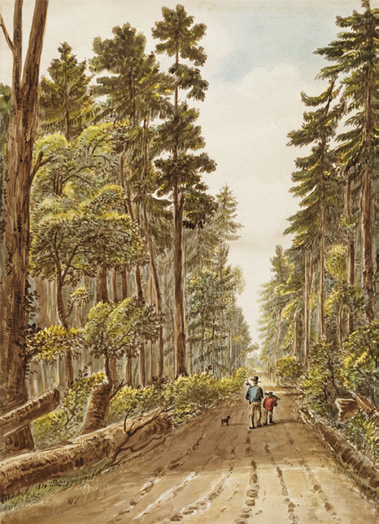
It may already be clear why so few have warmed to Roger Sheaffe in the 206 years since he wrote this report. He had saved the day at Queenston the previous October but this report cannot be read at face value. “Disagreements over his actions at York,” notes the Dictionary of Canadian Biography, “continue to this day.”
Sheaffe describes the explosion of the western battery’s magazine, and the even greater explosion of the fort’s magazine, and praises the superior quality of “some” of his troops. No one (except a friend of his) recalled his rallying soldiers during their retirement to the fort. Sheaffe explains at length why he was at York (instead of at Fort George, his HQ) but fails to mention the process of capitulation, which he had left in the hands of the local Militia.
The American squadron, which had come from the southeast, was first sighted off the Scarborough Bluffs on Monday evening. There were two modest warships and twelve armed schooners, all carrying troops. They made their way around what are now the islands (then still a peninsula) and anchored off “the french fort” – a clearing around the ruins of Fort Rouille, now on the Exhibition Grounds – first thing Tuesday morning.
The “small band of Indians” was about 80 or 90 Mississauga, Chippawa and other warriors; Major James Givens was Sheaffe’s liaison officer to several chiefs among them. They all had the misfortune to meet, at the water’s edge and in the woods west of the fort, the best unit in the US Army: the greencoat Rifle Regiment, experienced in forest warfare and tasked with securing the landing site. It was an indicator that, for the first time in this war, the Americans had a winning plan.
The only modern book-length account of the battle is Robert Malcomson’s Capital in Flames (Robin Brass 2008), which has complete appendices and excellent maps. More convenient accounts are in Carl Benn’s Historic Fort York and the booklet The Battle of Little York, by C.P. Stacey. Despite the attack being a rare example early in the War of 1812 of a well planned, resourced and executed operation by US forces, American writers do not highlight the victory but just place it in the war as a whole. Examples of American accounts may be found in Donald Hickey’s endlessly entertaining Don’t Give Up the Ship! Myths of the War of 1812 (Illinois 2006) and Alan Taylor’s The Civil War of 1812 (Knopf 2011). All but Stacey are available in the fort’s Canteen. Sheaffe’s letter is from Select British Documents of the Canadian War of 1812, Vol.II, ed. William Wood (Champlain Society 1923). His entry in the Dictionary of Canadian Biography is by Carol Whitfield and Wesley Turner.
Original printed pages