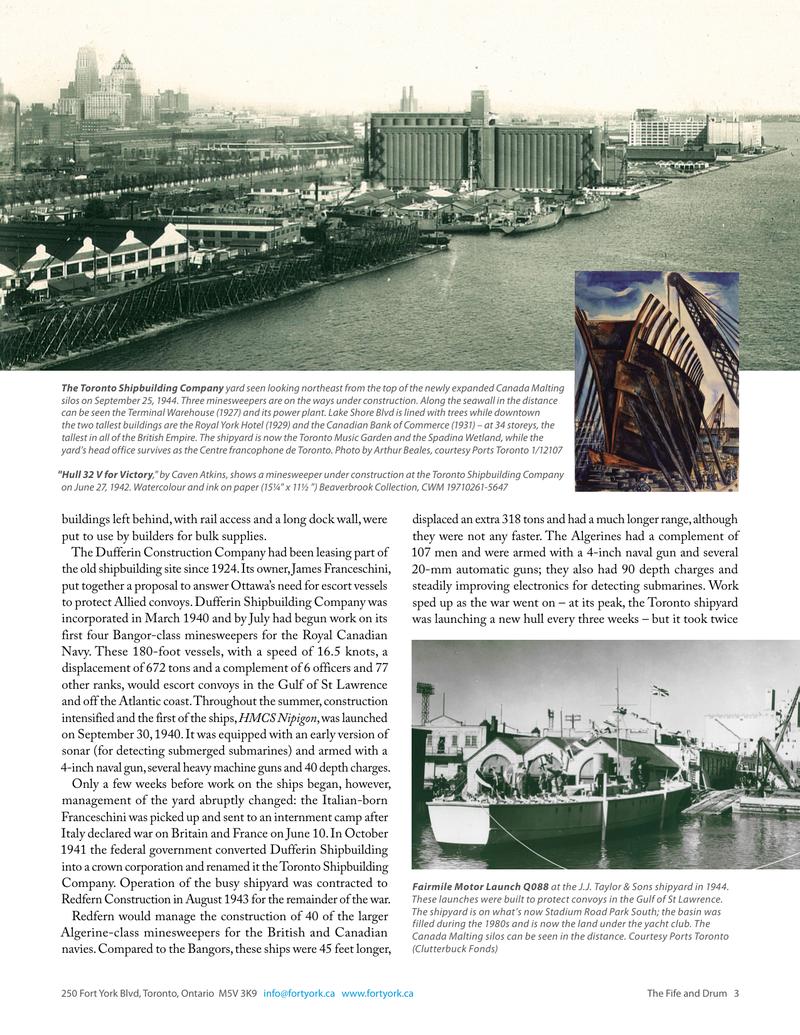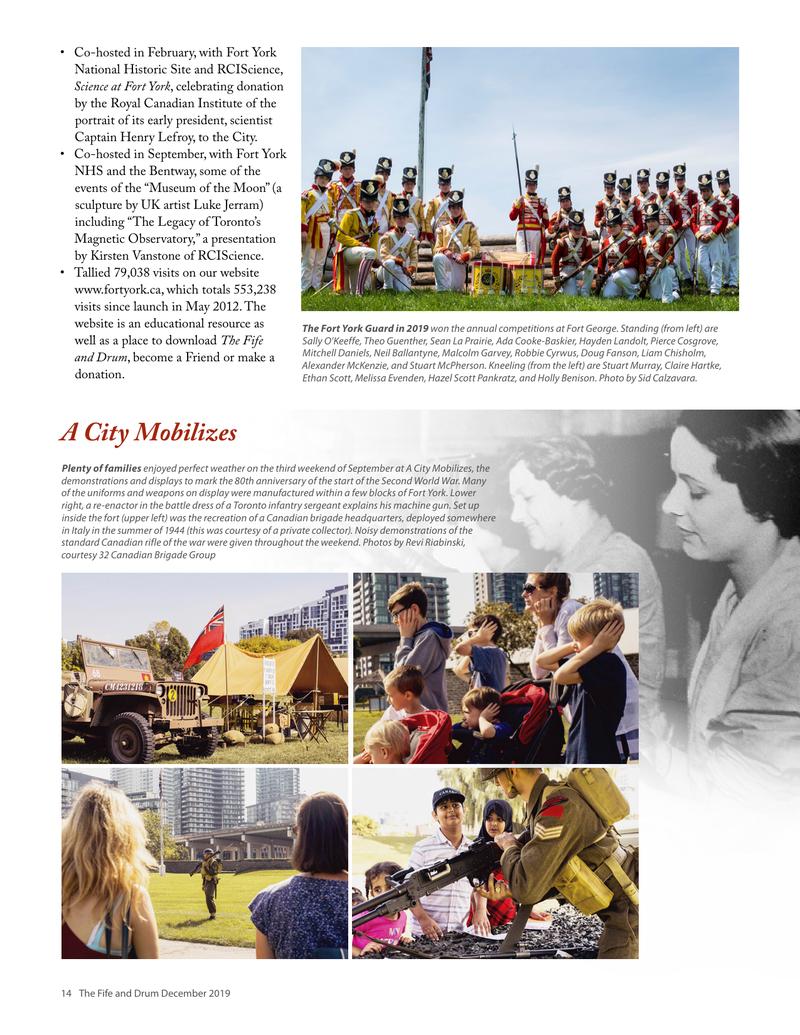
The buildings left behind, with rail access and a long dock wall, were put to use by builders for bulk supplies.
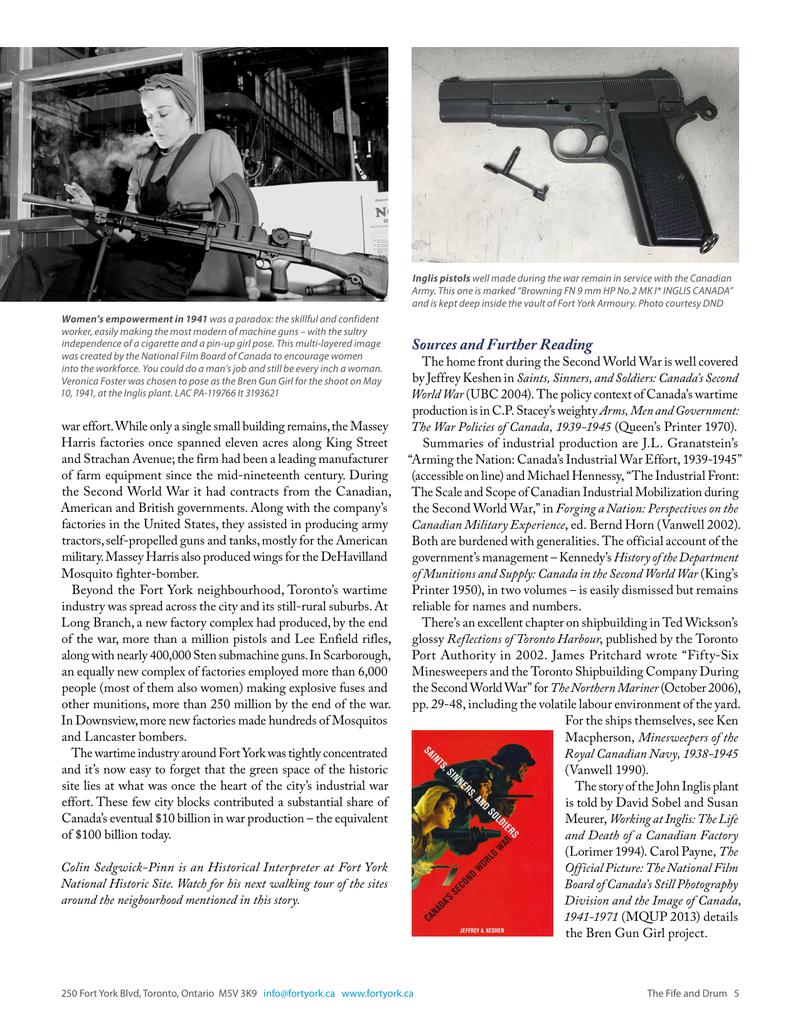
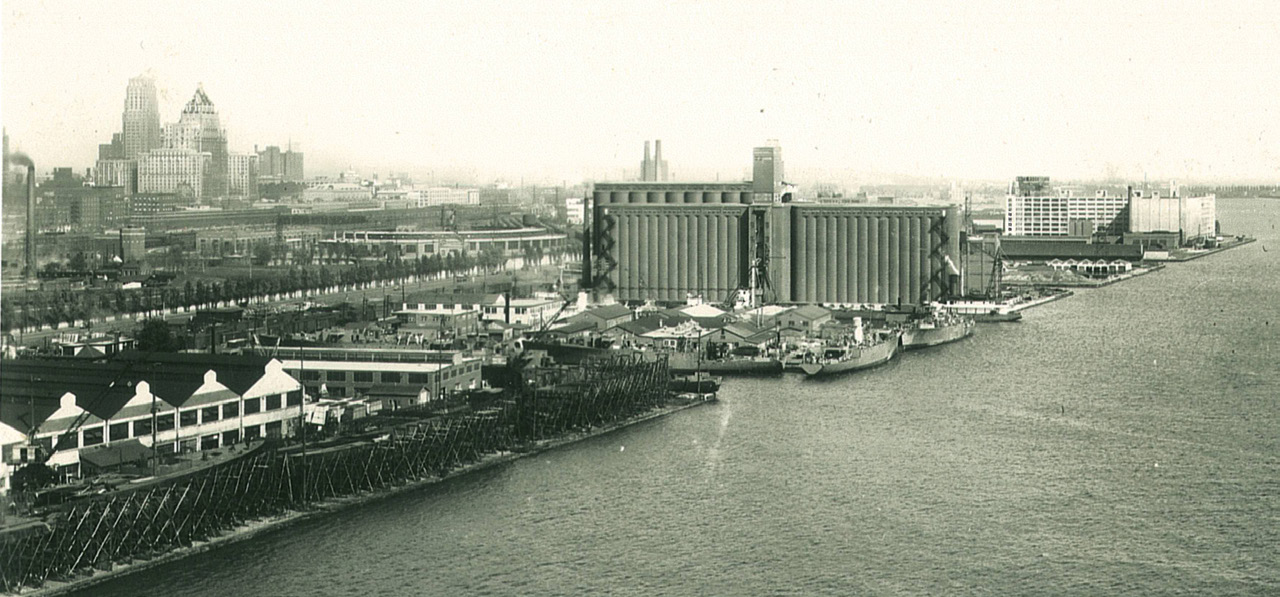
The Dufferin Construction Company had been leasing part of the old shipbuilding site since 1924. Its owner, James Franceschini, put together a proposal to answer Ottawa’s need for escort vessels to protect Allied convoys. Dufferin Shipbuilding Company was incorporated in March 1940 and by July had begun work on its first four Bangor-class minesweepers for the Royal Canadian Navy. These 180-foot vessels, with a speed of 16.5 knots, a displacement of 672 tons and a complement of 6 officers and 77 other ranks, would escort convoys in the Gulf of St Lawrence and off the Atlantic coast. Throughout the summer, construction intensified and the first of the ships, HMCS Nipigon, was launched on September 30, 1940. It was equipped with an early version of sonar (for detecting submerged submarines) and armed with a 4-inch naval gun, several heavy machine guns and 40 depth charges.
Only a few weeks before work on the ships began, however, management of the yard abruptly changed: the Italian-born Franceschini was picked up and sent to an internment camp after Italy declared war on Britain and France on June 10. In October 1941 the federal government converted Dufferin Shipbuilding into a crown corporation and renamed it the Toronto Shipbuilding Company. Operation of the busy shipyard was contracted to Redfern Construction in August 1943 for the remainder of the war.
Redfern would manage the construction of 40 of the larger Algerine-class minesweepers for the British and Canadian navies. Compared to the Bangors, these ships were 45 feet longer, displaced an extra 318 tons and had a much longer range, although they were not any faster. The Algerines had a complement of 107 men and were armed with a 4-inch naval gun and several 20-mm automatic guns; they also had 90 depth charges and steadily improving electronics for detecting submarines. Work sped up as the war went on – at its peak, the Toronto shipyard was launching a new hull every three weeks – but it took twice
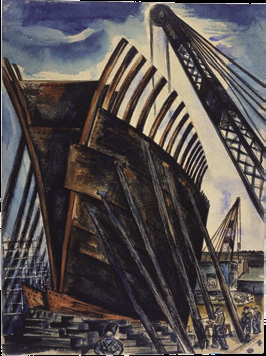
war effort. While only a single small building remains, the Massey Harris factories once spanned eleven acres along King Street and Strachan Avenue; the firm had been a leading manufacturer of farm equipment since the mid-nineteenth century. During the Second World War it had contracts from the Canadian, American and British governments. Along with the company’s factories in the United States, they assisted in producing army tractors, self-propelled guns and tanks, mostly for the American military. Massey Harris also produced wings for the DeHavilland Mosquito fighter-bomber.
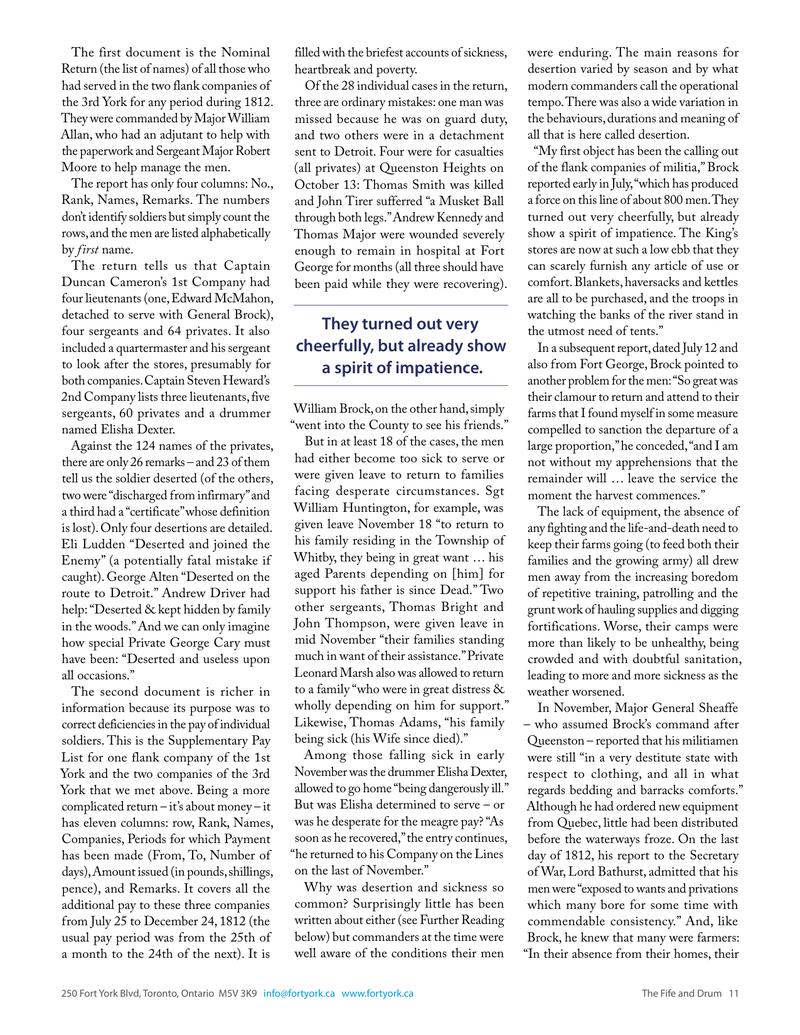
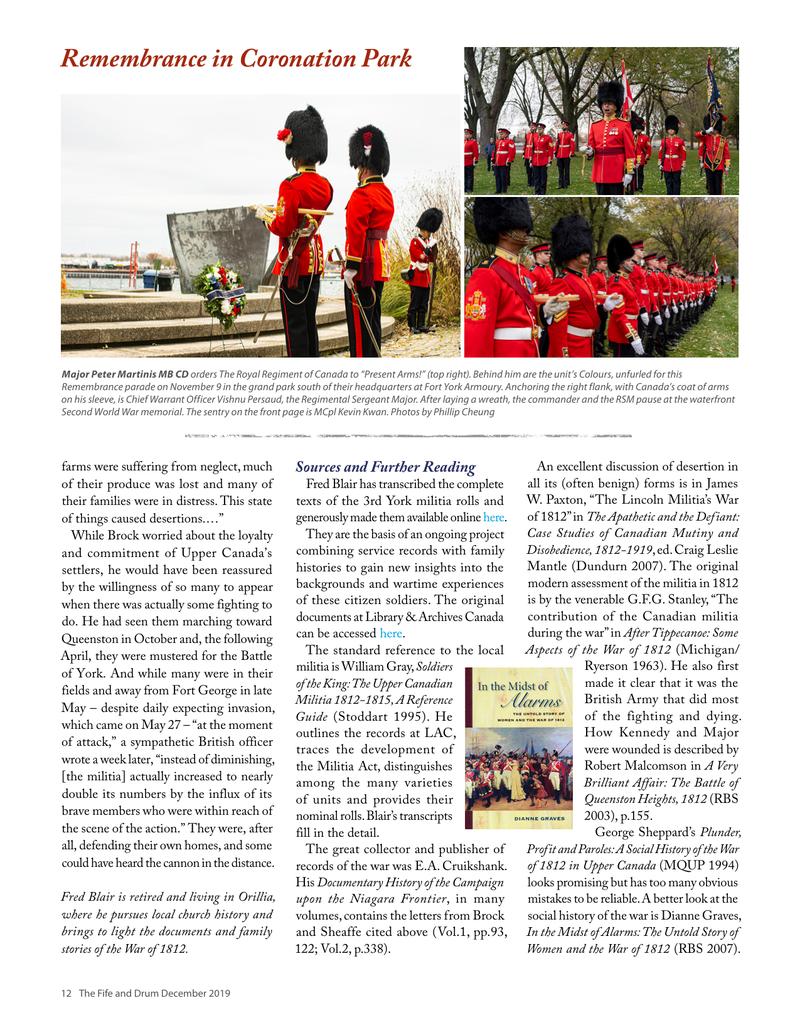
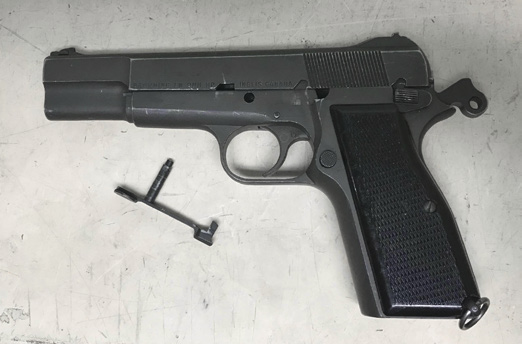
Beyond the Fort York neighbourhood, Toronto’s wartime industry was spread across the city and its still-rural suburbs. At Long Branch, a new factory complex had produced, by the end of the war, more than a million pistols and Lee Enfield rifles, along with nearly 400,000 Sten submachine guns. In Scarborough, an equally new complex of factories employed more than 6,000 people (most of them also women) making explosive fuses and other munitions, more than 250 million by the end of the war. In Downsview, more new factories made hundreds of Mosquitos and Lancaster bombers.
The wartime industry around Fort York was tightly concentrated and it’s now easy to forget that the green space of the historic site lies at what was once the heart of the city’s industrial war effort. These few city blocks contributed a substantial share of Canada’s eventual $10 billion in war production – the equivalent of $100 billion today.
Sources & Further Reading
The home front during the Second World War is well covered by Jeffrey Keshen in Saints, Sinners, and Soldiers: Canada’s Second World War (UBC 2004). The policy context of Canada’s wartime production is in C.P. Stacey’s weighty Arms, Men and Government: The War Policies of Canada, 1939-1945 (Queen’s Printer 1970).
Summaries of industrial production are J.L. Granatstein’s “Arming the Nation: Canada’s Industrial War Effort, 1939-1945” (accessible on line) and Michael Hennessy, “The Industrial Front: The Scale and Scope of Canadian Industrial Mobilization during the Second World War,” in Forging a Nation: Perspectives on the Canadian Military Experience, ed. Bernd Horn (Vanwell 2002). Both are burdened with generalities. The official account of the government’s management – Kennedy’s History of the Department of Munitions and Supply: Canada in the Second World War (King’s Printer 1950), in two volumes – is easily dismissed but remains reliable for names and numbers.
There’s an excellent chapter on shipbuilding in Ted Wickson’s glossy Reflections of Toronto Harbour, published by the Toronto Port Authority in 2002. James Pritchard wrote “Fifty-Six Minesweepers and the Toronto Shipbuilding Company During the Second World War” for The Northern Mariner (October 2006), pp. 29-48, including the warlike labour environment of the yard. For the ships themselves, see Ken Macpherson, Minesweepers of the Royal Canadian Navy, 1938-1945 (Vanwell 1990).
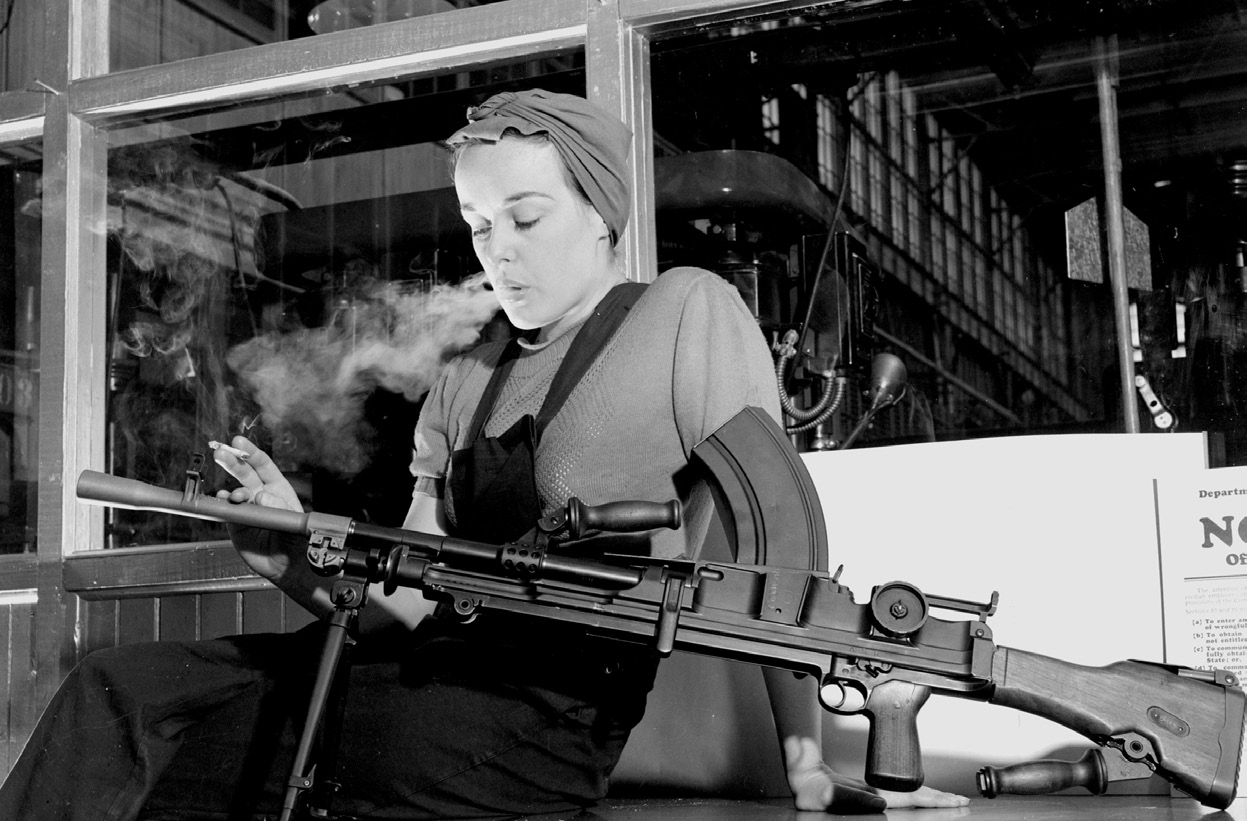
The story of the John Inglis plant is told by David Sobel and Susan Meurer, Working at Inglis: The Life and Death of a Canadian Factory (Lorimer 1994). Carol Payne, The Official Picture: The National Film Board of Canada’s Still Photography Division and the Image of Canada, 1941-1971 (MQUP 2013) details the Bren Gun Girl project.
Original printed pages