The inquiry that led to the image on the cover of July’s The Fife and Drum began with a newspaper clipping glued into a Toronto Historical Board scrapbook more than 50 years ago. The photograph of Guardsman David Rapson rubbing his aching foot appeared in The Telegram on 18 August 1967, but it had yellowed with age and lost much of its clarity. The search for the original negative resulted not only in the crisp scan used in the last issue, but also to a cache of 25 envelopes containing almost 480 negatives taken by staff photographers between 1964 and 1971 that have remained virtually untouched since they were donated to York University by John W.H. Bassett in 1974. The Telegram’s massive photographic library—approximately 466,000 prints and 833,500 negatives held by the Clara Thomas Archives and Special Collections of York University Libraries—offers ample opportunities to shed new light on the people and places of mid-twentieth-century Toronto, including Fort York.
The Telegram’s massive photographic library—approximately 466,000 prints and 833,500 negatives held by the Clara Thomas Archives and Special Collections of York University Libraries
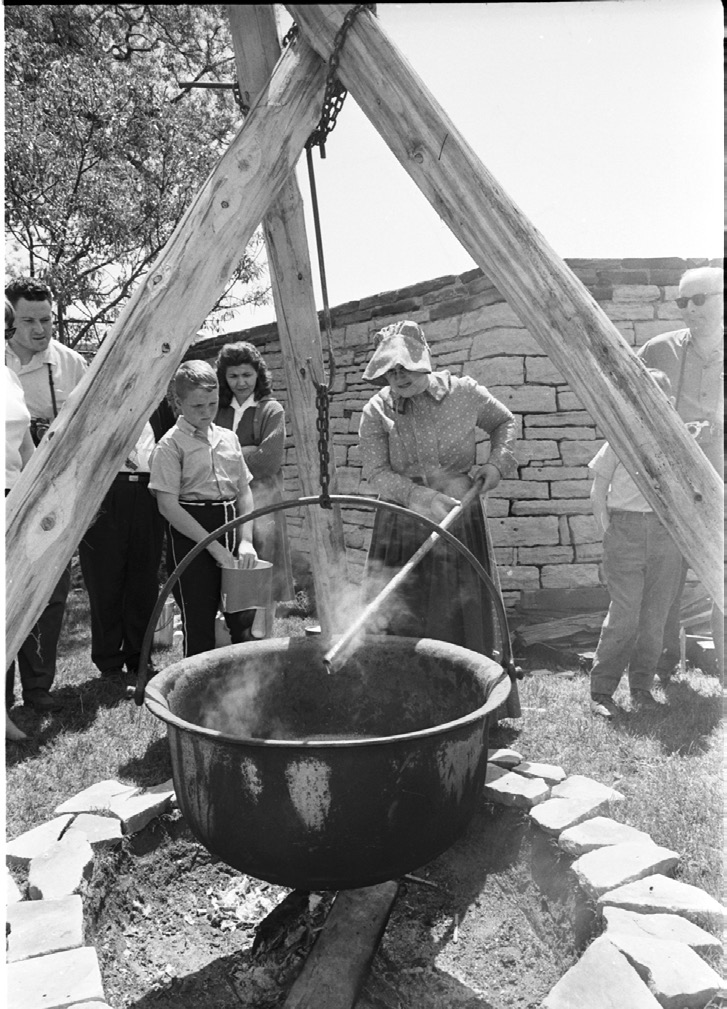
The original purpose for photographic journalism was not to support historical interpretation, but to sell newspapers. This objective influenced the way that photographs of Fort York were created and used by the editors. In the case of an assignment on 24 April 1969, the photo order directed the photographer “to pick a pretty girl in costume who is involved in preparing a luncheon that day. Get a selection of attractive, animated shots of her in front of the hearth on which the food is being prepared – stirring, tasting or adding something to the food, or taking bread or other food from the hearth oven.” Only “one good pic” was needed, but none of the eleven exposures taken that day was used in the newspaper. This was a fairly frequent occurrence—out of the twenty-five assignments devoted to Fort York, eight of the envelopes are marked, “Not used,” and illustrated articles were found for only twelve of the assignments. Photographers took between three and eighty negatives per assignment, but usually only a single image was selected for publication, the exception being coverage of “The 1812 War Comes Alive” on 19 August 1965, when four images of the teenaged Guard were chosen. The editor’s influence continued with use of the grease pen to highlight certain features, and in the case of Guardsman David Rapson, flipping the image so that his bandaged foot drew the reader’s attention to the centre of the page despite the irregularity of Rapson’s rank insignia appearing on his left sleeve.
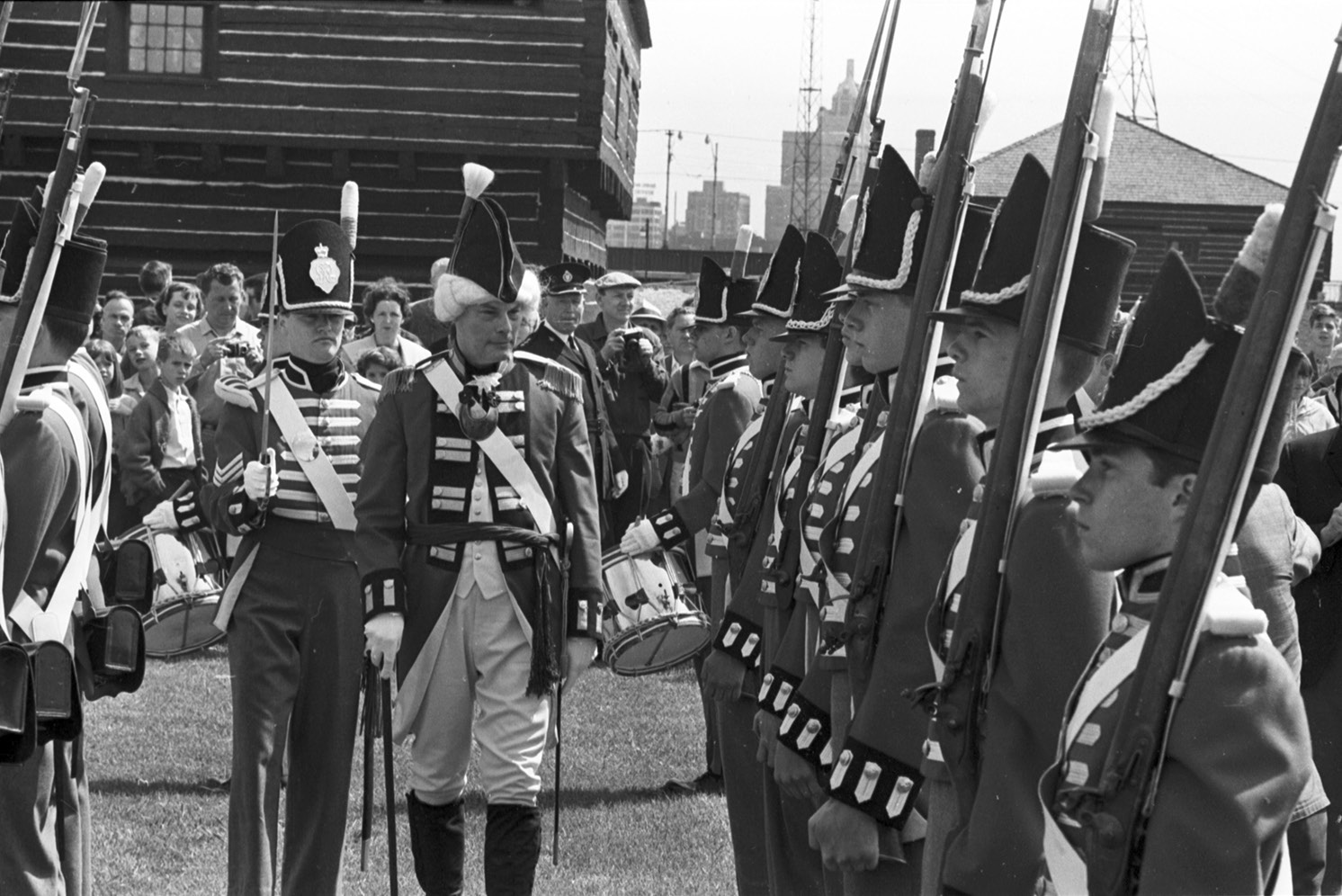
The results of editorial decisions mean that the photographic negatives offer more comprehensive visual coverage of Fort York between 1964 and 1971 than can be found in the printed pages of The Telegram. The photographs are particularly useful for developing an understanding of the relationship between the site, the Guard, and the many people who visited the annual Festival of the Fort, re-enactments of the 1813 invasion, the opening of the Canadian National Exhibition, and summer’s final Retreat ceremony. Special events often drew photographers to the fort, such as an exhibit of paintings by artist Tom McNeely on Canada’s
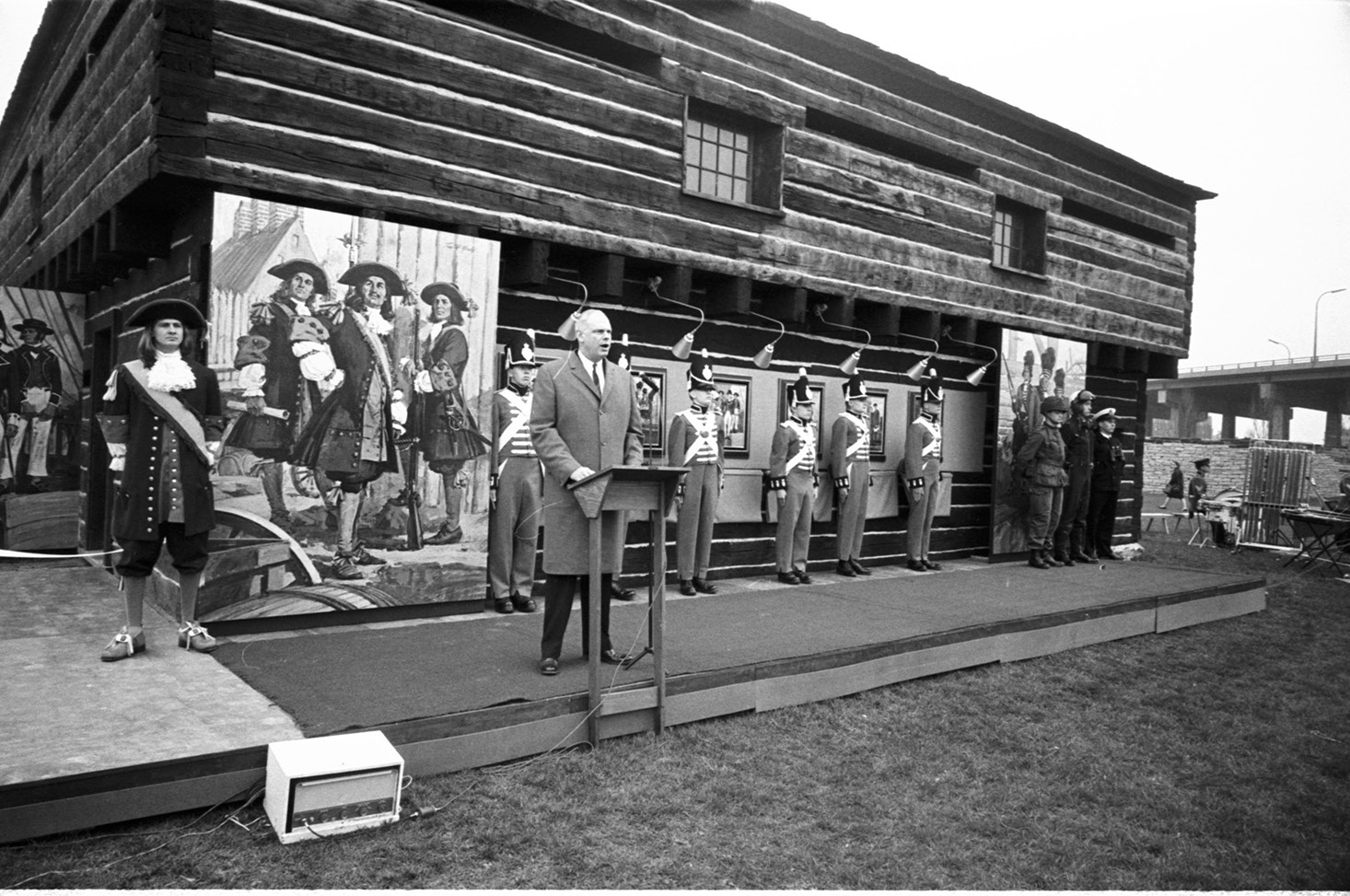
military heritage that was opened by Paul Hellyer, Minister of National Defence, in May 1966. Helen Gagen’s article on “Past and Present Tips for a Patriotic Holiday” on 19 May 1971 not only offered a recipe for Fort York whole wheat bread, but also showed interpreters stirring soup and checking on shortbread in the fort’s kitchen. The Guard’s 80-mile march from Fort George to Fort York in August 1967—the focus of William Stewart’s recent reminiscences—was particularly well documented, with more than 100 negatives created over the course of several days. Only three images made their way into print.

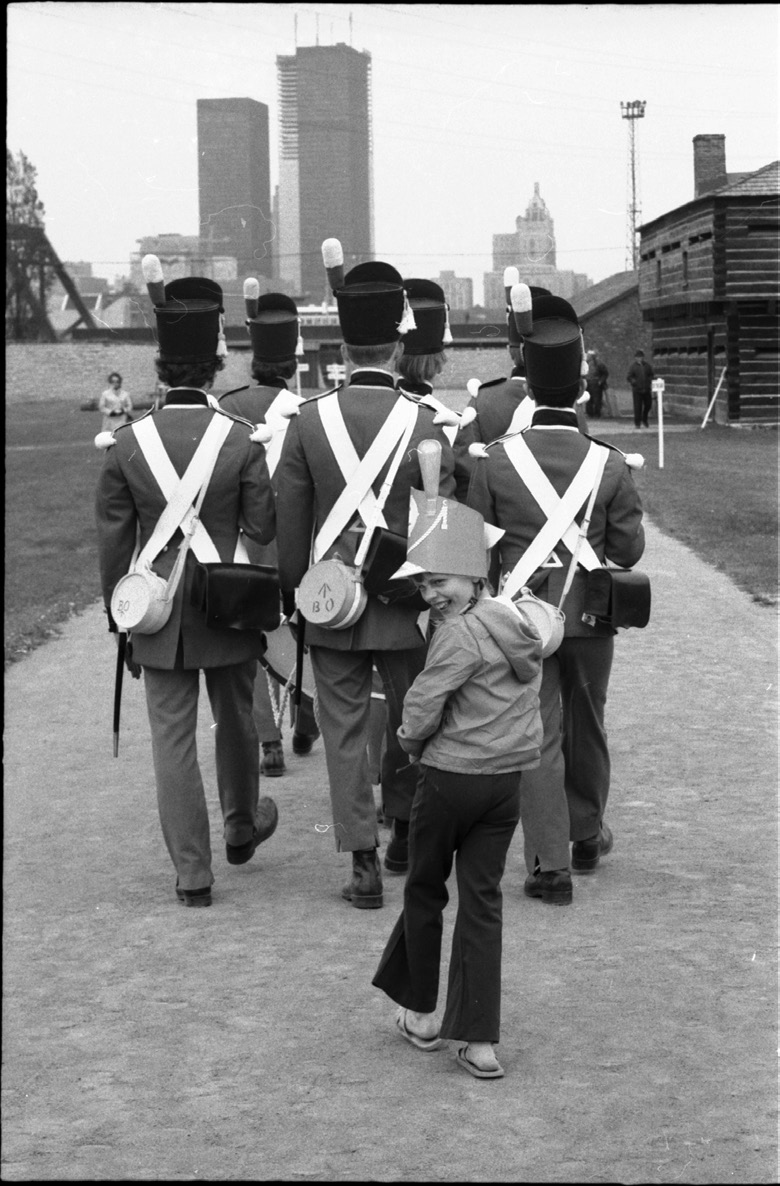
John Sharp was the last staff photographer assigned to cover the Festival of the Fort on Victoria Day, 1971, and his image of the Guard marching off with a young girl in pursuit appeared under the headline, “In Step with the Times.” The same could not be said for The Telegram; declining circulation led to its closure after publishing its last issue on 30 October 1971. Its photographs live on at the Clara Thomas Archives and Special Collections, where they are consulted almost every day to provide images for articles, blogs, books, exhibits, and films. Readers are invited to visit the reading room on the third floor of York University’s Scott Library between 10:00 a.m. and 4:30 p.m., Monday to Friday, and explore the relationship between Fort York and its community during the turbulent 1960s through the archival legacy of the newspaper locally known as the Tely. For information about the Clara Thomas Archives and Special Collections, please visit: https://www.library.yorku.ca/web/archives/. An inventory of the Toronto Telegram fonds can be found at: http://archives.library.yorku.ca/atom/index.php/toronto-telegram-fonds.
The images illustrated here all come courtesy of the York University Libraries, Clara Thomas Archives and Special Collections, Toronto Telegram fonds.
Original printed pages