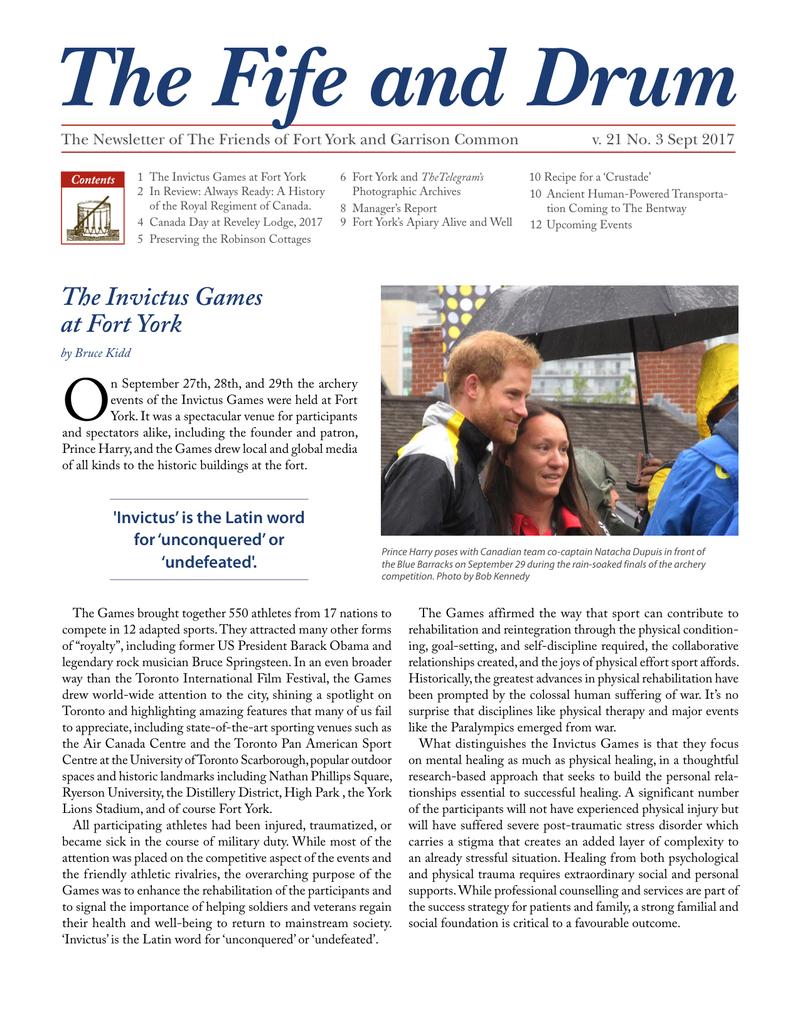
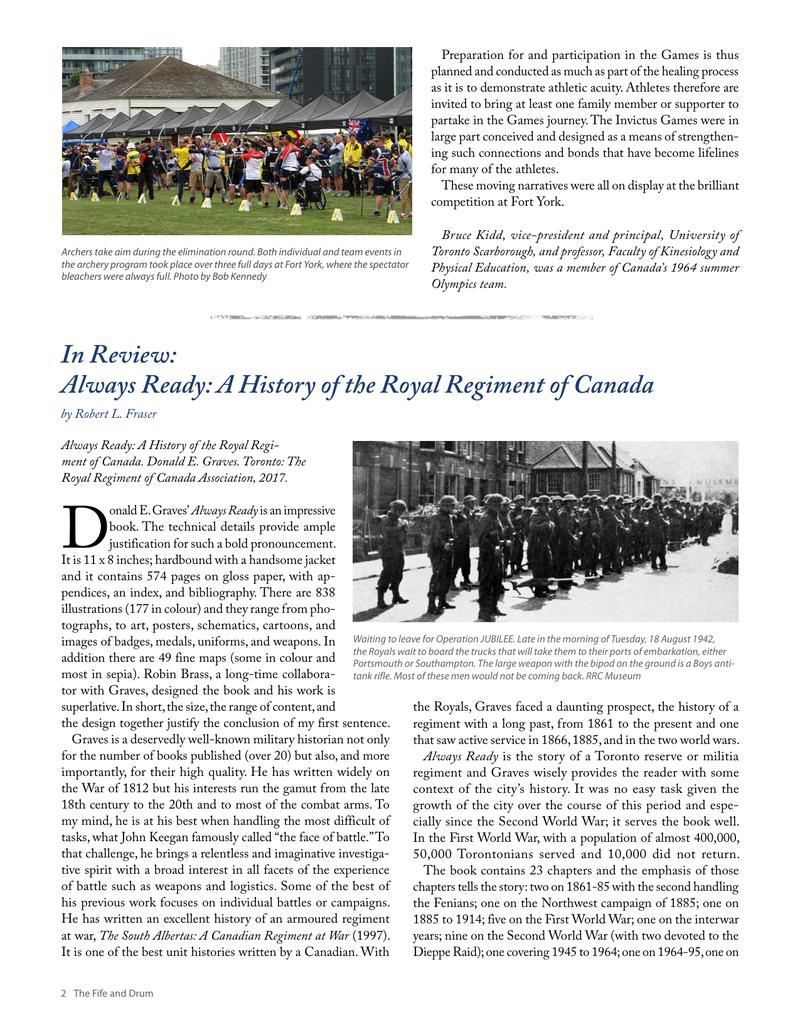
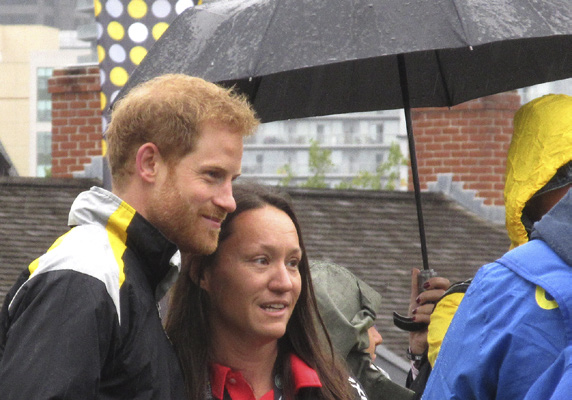
On September 27th, 28th, and 29th the archery events of the Invictus Games were held at Fort York. It was a spectacular venue for participants and spectators alike, including the founder and patron, Prince Harry, and the Games drew local and global media of all kinds to the historic buildings at the fort.
‘Invictus’ is the Latin word for ‘unconquered’ or ‘undefeated’.
The Games brought together 550 athletes from 17 nations to compete in 12 adapted sports. They attracted many other forms of “royalty”, including former US President Barack Obama and legendary rock musician Bruce Springsteen. In an even broader way than the Toronto International Film Festival, the Games drew world-wide attention to the city, shining a spotlight on Toronto and highlighting amazing features that many of us fail to appreciate, including state-of-the-art sporting venues such as the Air Canada Centre and the Toronto Pan American Sport Centre at the University of Toronto Scarborough, popular outdoor spaces and historic landmarks including Nathan Phillips Square, Ryerson University, the Distillery District, High Park, the York Lions Stadium, and of course Fort York.
All participating athletes had been injured, traumatized, or became sick in the course of military duty. While most of the attention was placed on the competitive aspect of the events and the friendly athletic rivalries, the overarching purpose of the Games was to enhance the rehabilitation of the participants and to signal the importance of helping soldiers and veterans regain their health and well-being to return to mainstream society. ‘Invictus’ is the Latin word for ‘unconquered’ or ‘undefeated’.
The Games affirmed the way that sport can contribute to rehabilitation and reintegration through the physical conditioning, goal-setting, and self-discipline required, the collaborative relationships created, and the joys of physical effort sport affords. Historically, the greatest advances in physical rehabilitation have been prompted by the colossal human suffering of war. It’s no surprise that disciplines like physical therapy and major events like the Paralympics emerged from war.
What distinguishes the Invictus Games is that they focus on mental healing as much as physical healing, in a thoughtful research-based approach that seeks to build the personal relationships essential to successful healing. A significant number of the participants will not have experienced physical injury but will have suffered severe post-traumatic stress disorder which carries a stigma that creates an added layer of complexity to an already stressful situation. Healing from both psychological and physical trauma requires extraordinary social and personal supports. While professional counselling and services are part of the success strategy for patients and family, a strong familial and social foundation is critical to a favourable outcome.

Preparation for and participation in the Games is thus planned and conducted as much as part of the healing process as it is to demonstrate athletic acuity. Athletes therefore are invited to bring at least one family member or supporter to partake in the Games journey. The Invictus Games were in large part conceived and designed as a means of strengthening such connections and bonds that have become lifelines for many of the athletes.
These moving narratives were all on display at the brilliant competition at Fort York.
Original printed pages