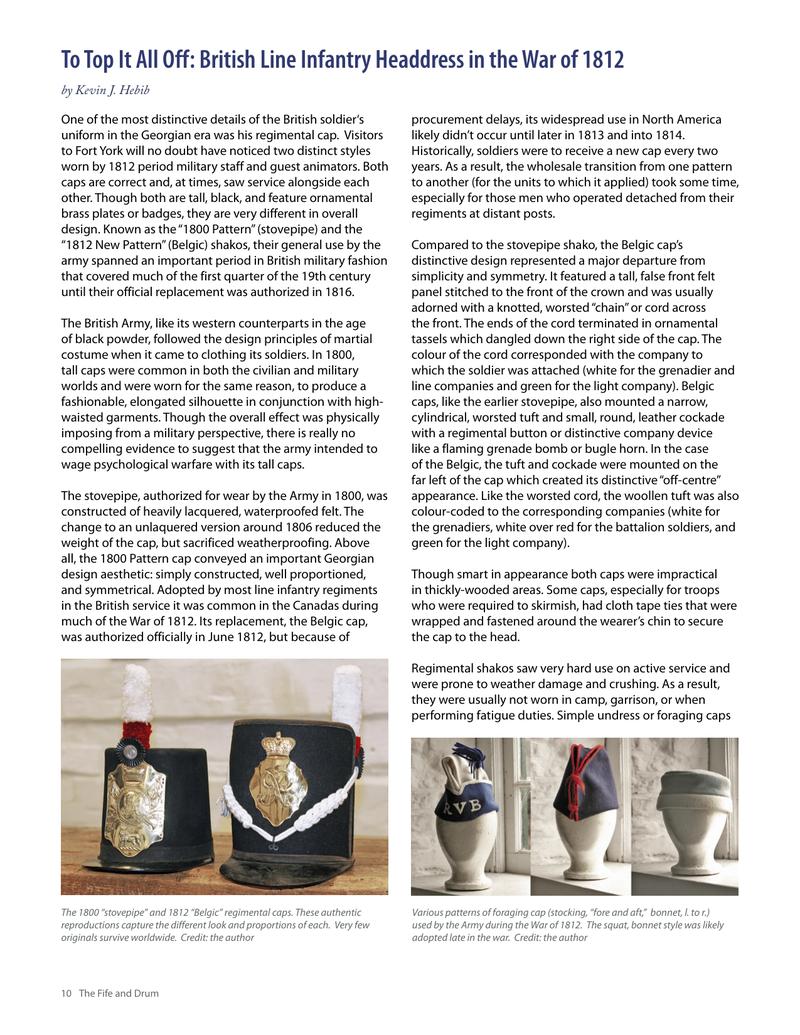
One of the most distinctive details of the British soldier’s uniform in the Georgian era was his regimental cap. Visitors to Fort York will no doubt have noticed two distinct styles worn by 1812 period military staff and guest animators. Both caps are correct and, at times, saw service alongside each other. Though both are tall, black, and feature ornamental brass plates or badges, they are very different in overall design. Known as the “1800 Pattern” (stovepipe) and the “1812 New Pattern” (Belgic) shakos, their general use by the army spanned an important period in British military fashion that covered much of the first quarter of the 19th century until their official replacement was authorized in 1816.
The British Army, like its western counterparts in the age of black powder, followed the design principles of martial costume when it came to clothing its soldiers. In 1800, tall caps were common in both the civilian and military worlds and were worn for the same reason, to produce a fashionable, elongated silhouette in conjunction with high-waisted garments. Though the overall effect was physically imposing from a military perspective, there is really no compelling evidence to suggest that the army intended to wage psychological warfare with its tall caps.
The stovepipe, authorized for wear by the Army in 1800, was constructed of heavily lacquered, waterproofed felt. The change to an unlacquered version around 1806 reduced the weight of the cap, but sacrificed weatherproofing. Above all, the 1800 Pattern cap conveyed an important Georgian design aesthetic: simply constructed, well proportioned, and symmetrical. Adopted by most line infantry regiments in the British service it was common in the Canadas during much of the War of 1812. Its replacement, the Belgic cap, was authorized officially in June 1812, but because of procurement delays, its widespread use in North America likely didn’t occur until later in 1813 and into 1814. Historically, soldiers were to receive a new cap every two years. As a result, the wholesale transition from one pattern to another (for the units to which it applied) took some time, especially for those men who operated detached from their regiments at distant posts.
Compared to the stovepipe shako, the Belgic cap’s distinctive design represented a major departure from simplicity and symmetry. It featured a tall, false front felt panel stitched to the front of the crown and was usually adorned with a knotted, worsted “chain” or cord across the front. The ends of the cord terminated in ornamental tassels which dangled down the right side of the cap. The colour of the cord corresponded with the company to which the soldier was attached (white for the grenadier and line companies and green for the light company). Belgic caps, like the earlier stovepipe, also mounted a narrow, cylindrical, worsted tuft and small, round, leather cockade with a regimental button or distinctive company device like a flaming grenade bomb or bugle horn. In the case of the Belgic, the tuft and cockade were mounted on the far left of the cap which created its distinctive “off-centre” appearance. Like the worsted cord, the woollen tuft was also colour-coded to the corresponding companies (white for the grenadiers, white over red for the battalion soldiers, and green for the light company).
Though smart in appearance both caps were impractical in thickly-wooded areas. Some caps, especially for troops who were required to skirmish, had cloth tape ties that were wrapped and fastened around the wearer’s chin to secure the cap to the head.
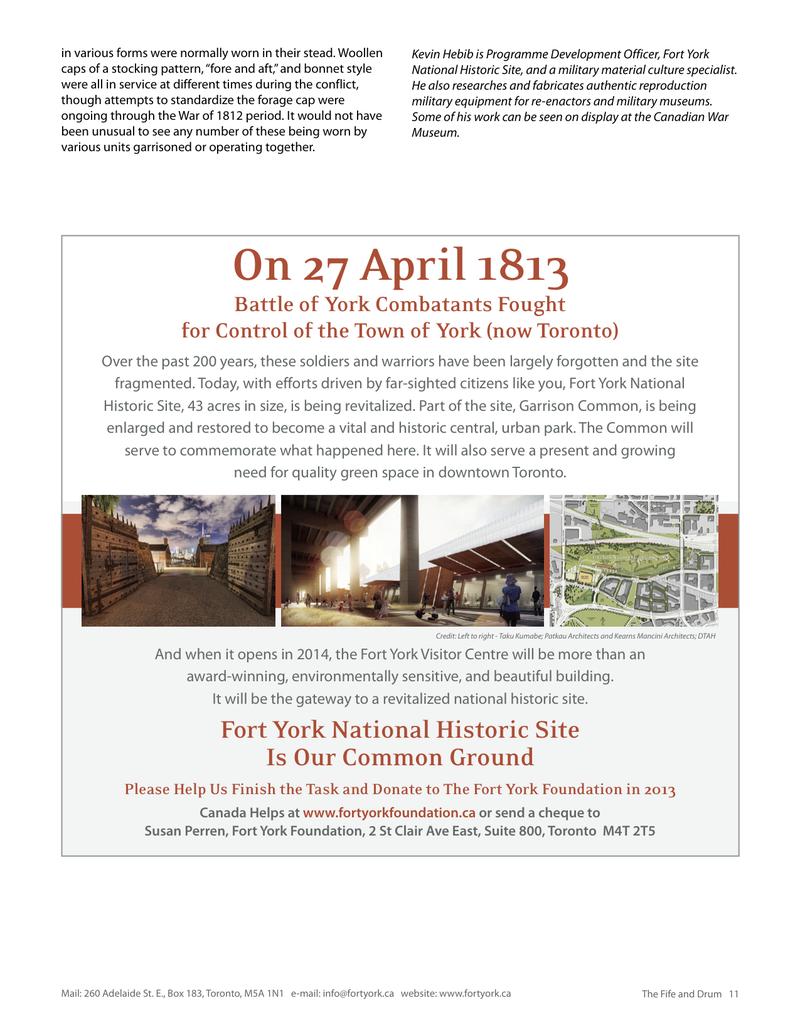
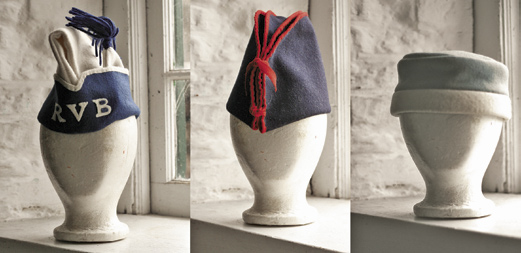
Regimental shakos saw very hard use on active service and were prone to weather damage and crushing. As a result, they were usually not worn in camp, garrison, or when performing fatigue duties. Simple undress or foraging caps in various forms were normally worn in their stead. Woollen caps of a stocking pattern, “fore and aft,” and bonnet style were all in service at different times during the conflict, though attempts to standardize the forage cap were ongoing through the War of 1812 period. It would not have been unusual to see any number of these being worn by various units garrisoned or operating together.

Original printed pages