Conserving national history for future generations is an important responsibility that requires a thorough understanding of the historic materials being preserved and a carefully thought-out plan. As well, it’s essential in such projects to have a team of knowledgeable consultants and skilled contractors, all experienced in historic restoration. All of these factors came together for the recently completed brick masonry restoration project at Fort York National Historic Site, which was managed by Capital Assets, Museums & Heritage Services of the City of Toronto.
The project centred on restoration of the four surviving brick masonry buildings: the North Soldiers’ Barracks, the South Soldiers’ Barracks, the Officers’ Mess and the Brick Magazine. These buildings were put up when the fort was rebuilt in the years right after the War of 1812 (circa 1814 to 1816) and contain some of the oldest brickwork in Toronto.
Over the last 200 years, these buildings have been subjected to many restoration projects that did not understand or respect the heritage fabric and that used inappropriate replacement materials. This led to deterioration and the loss of original brick and mortar. To avoid making the same mistakes, we needed to understand the deterioration mechanisms and the characteristics of the materials.
The walls were originally built with bricks handmade from clay moulded in wood forms and laid up with soft lime-based mortar. Because of the cost of importing bricks, they were most likely made locally. The source of the clay may have been the banks of nearby Garrison Creek, where the soldiers were no doubt used as a workforce to extract the mud and mould the bricks.
These buildings were put up when the fort was rebuilt in the years right after the War of 1812
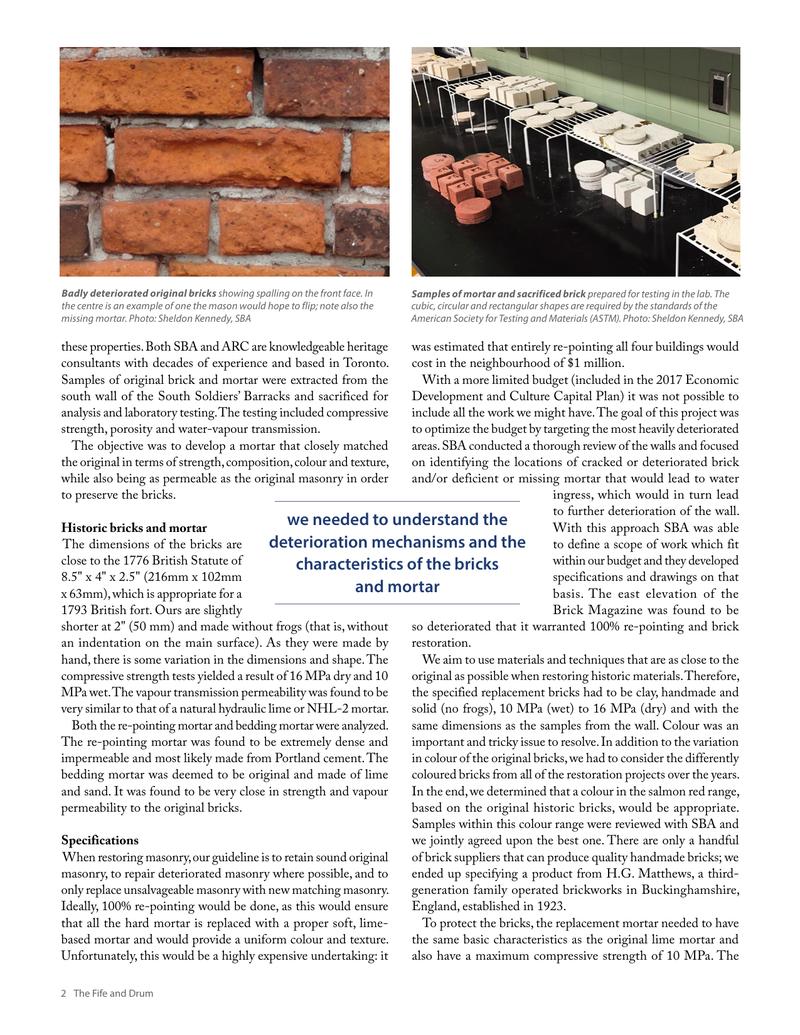
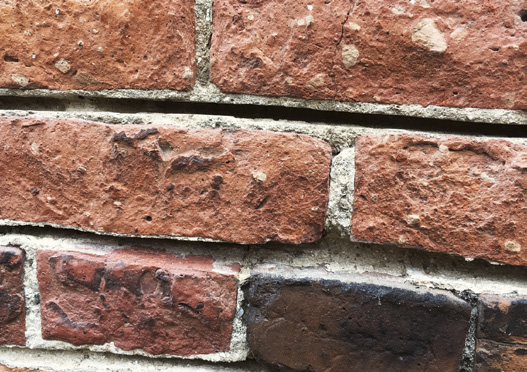
While clay bricks can normally be expected to last for hundreds of years, mortar is only expected to last up to 100 years before re-pointing is required. As re-pointing proceeded during the 20th century, a hard and dense Portland cement-based mortar came to be used because it was readily available. This dense Portland cement mortar is not as permeable as the historic brick and it caused water vapour from within the buildings to be trapped inside the brick, leading to deterioration from freeze-thaw cycles in winter and early spring. A common result is the first 5 to 10 mm of the face of the brick spalling off, leaving the harder mortar intact.
Having worked out the mechanism of deterioration, the next step was to determine the material properties of the brick and mortar in order to develop a suitable restoration strategy. We engaged the services of Stevens Burgess Architects Ltd. (SBA) and their sub-consultant ArconTEST Incorporated (ARC) to determine these properties. Both SBA and ARC are knowledgeable heritage consultants with decades of experience and based in Toronto.
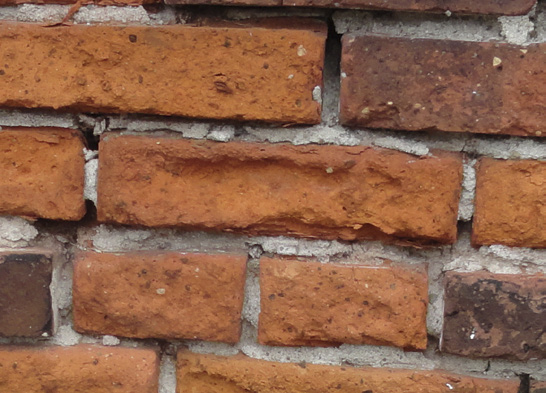
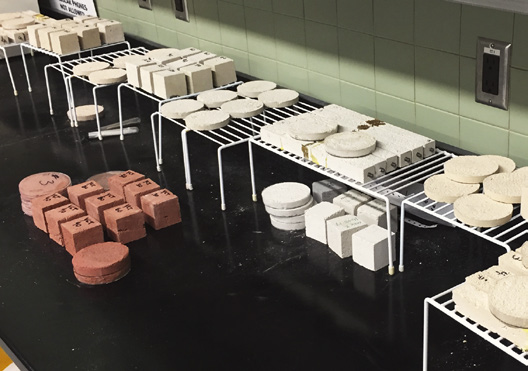
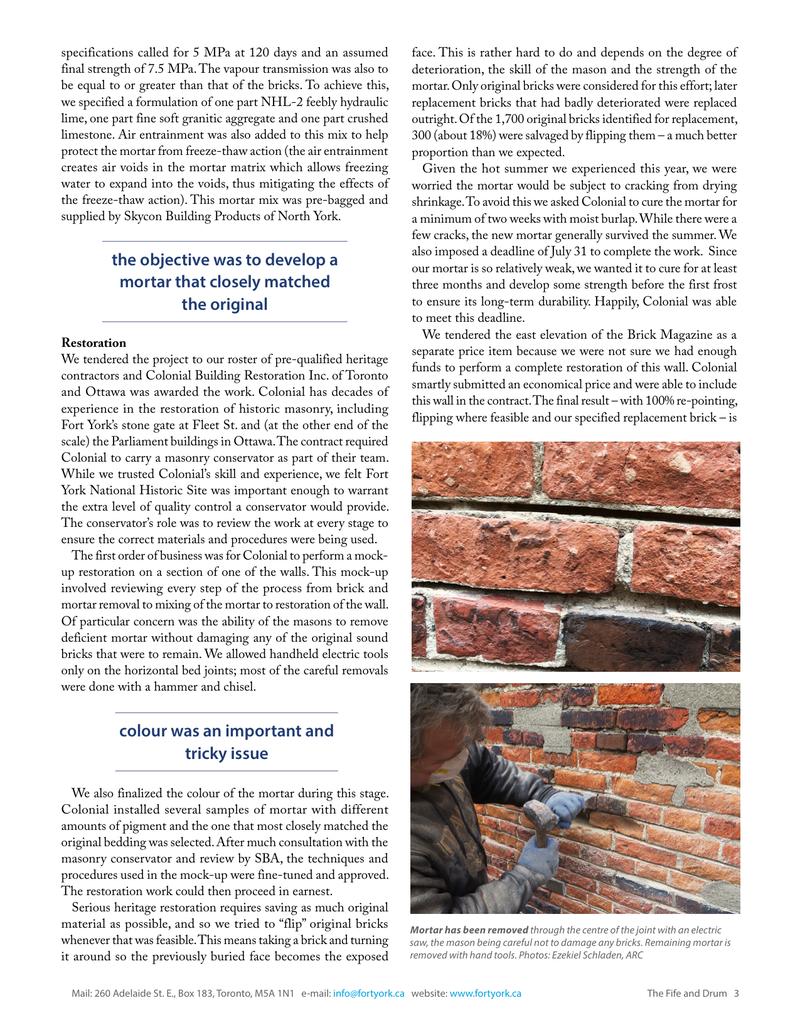
Samples of original brick and mortar were extracted from the south wall of the South Soldiers’ Barracks and sacrificed for analysis and laboratory testing. The testing included compressive strength, porosity and water-vapour transmission.
The objective was to develop a mortar that closely matched the original in terms of strength, composition, colour and texture, while also being as permeable as the original masonry in order to preserve the bricks.
Historic bricks and mortar
The dimensions of the bricks are close to the 1776 British Statute of 8.5″ x 4″ x 2.5″ (216mm x 102mm x 63mm), which is appropriate for a 1793 British fort. Ours are slightly shorter at 2″ (50 mm) and made without frogs (that is, without an indentation on the main surface). As they were made by hand, there is some variation in the dimensions and shape. The compressive strength tests yielded a result of 16 MPa dry and 10 MPa wet. The vapour transmission permeability was found to be very similar to that of a natural hydraulic lime or NHL-2 mortar.
Both the re-pointing mortar and bedding mortar were analyzed. The re-pointing mortar was found to be extremely dense and impermeable and most likely made from Portland cement. The bedding mortar was deemed to be original and made of lime and sand. It was found to be very close in strength and vapour permeability to the original bricks.
Specifications
we needed to understand the deterioration mechanisms and the characteristics of the bricks and mortar
When restoring masonry, our guideline is to retain sound original masonry, to repair deteriorated masonry where possible, and to only replace unsalvageable masonry with new matching masonry. Ideally, 100% re-pointing would be done, as this would ensure that all the hard mortar is replaced with a proper soft, lime-based mortar and would provide a uniform colour and texture. Unfortunately, this would be a highly expensive undertaking: it was estimated that entirely re-pointing all four buildings would cost in the neighbourhood of $1 million.
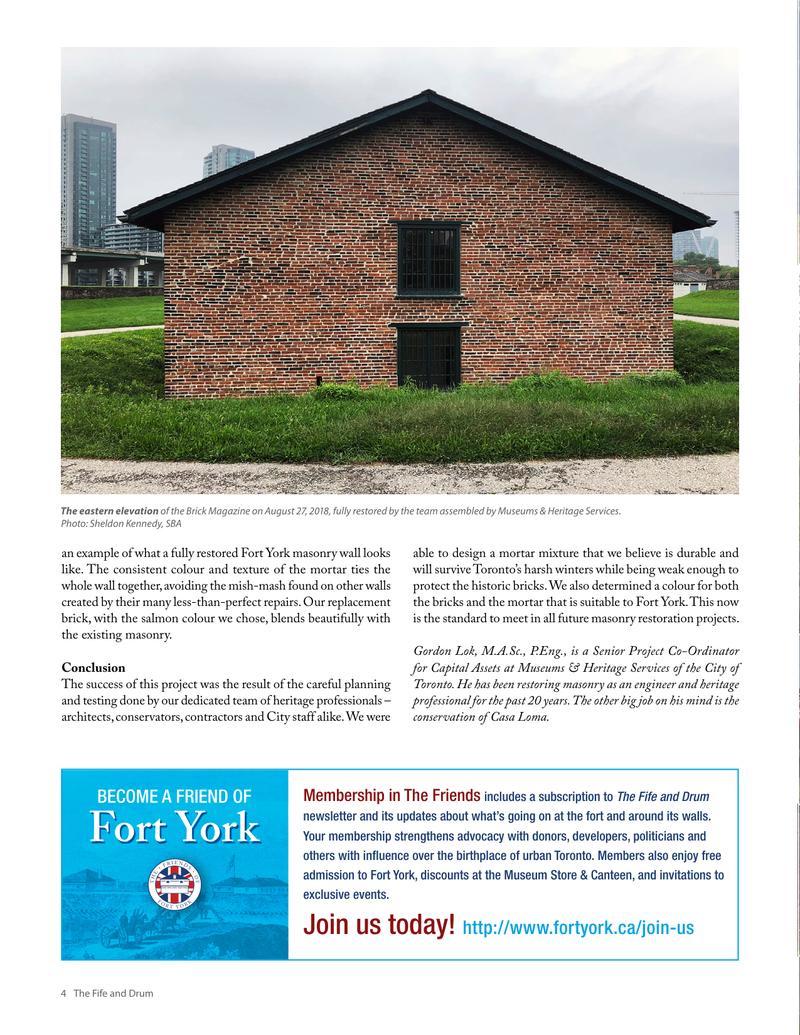
With a more limited budget (included in the 2017 Economic Development and Culture Capital Plan) it was not possible to include all the work we might have. The goal of this project was to optimize the budget by targeting the most heavily deteriorated areas. SBA conducted a thorough review of the walls and focused on identifying the locations of cracked or deteriorated brick and/or deficient or missing mortar that would lead to water ingress, which would in turn lead to further deterioration of the wall. With this approach SBA was able to define a scope of work which fit within our budget and they developed specifications and drawings on that basis. The east elevation of the Brick Magazine was found to be so deteriorated that it warranted 100% re-pointing and brick restoration.
We aim to use materials and techniques that are as close to the original as possible when restoring historic materials. Therefore, the specified replacement bricks had to be clay, handmade and solid (no frogs), 10 MPa (wet) to 16 MPa (dry) and with the same dimensions as the samples from the wall. Colour was an important and tricky issue to resolve. In addition to the variation in colour of the original bricks, we had to consider the differently coloured bricks from all of the restoration projects over the years. In the end, we determined that a colour in the salmon red range, based on the original historic bricks, would be appropriate. Samples within this colour range were reviewed with SBA and we jointly agreed upon the best one. There are only a handful of brick suppliers that can produce quality handmade bricks; we ended up specifying a product from H.G. Matthews, a third-generation family operated brickworks in Buckinghamshire, England, established in 1923.
To protect the bricks, the replacement mortar needed to have the same basic characteristics as the original lime mortar and also have a maximum compressive strength of 10 MPa. The specifications called for 5 MPa at 120 days and an assumed final strength of 7.5 MPa. The vapour transmission was also to be equal to or greater than that of the bricks. To achieve this, we specified a formulation of one part NHL-2 feebly hydraulic lime, one part fine soft granitic aggregate and one part crushed limestone. Air entrainment was also added to this mix to help protect the mortar from freeze-thaw action (the air entrainment creates air voids in the mortar matrix which allows freezing water to expand into these voids, thus mitigating the effects of the freeze-thaw action). This mortar mix was pre-bagged and supplied by Slevcon Building Products of North York.
the objective was to develop a mortar that closely matched the original
Restoration
We tendered the project to our roster of pre-qualified heritage contractors and Colonial Building Restoration Inc. of Toronto and Ottawa was awarded the work. Colonial has decades of experience in the restoration of historic masonry, including Fort York’s stone gate at Fleet St. and (at the other end of the scale) the Parliament buildings in Ottawa. The contract required Colonial to carry a masonry conservator as part of their team. While we trusted Colonial’s skill and experience, we felt Fort York National Historic Site was important enough to warrant the extra level of quality control a conservator would provide. The conservator’s role was to review the work at every stage to ensure the correct materials and procedures were being used.
The first order of business was for Colonial to perform a mock-up restoration on a section of one of the walls. This mock-up involved reviewing every step of the process from brick and mortar removal to mixing of the mortar to restoration of the wall. Of particular concern was the ability of the masons to remove deficient mortar without damaging any of the original sound bricks that were to remain. We allowed handheld electric tools only on the horizontal bed joints; most of the careful removals were done with a hammer and chisel.
colour was an important and tricky issue
We also finalized the colour of the mortar during this stage. Colonial installed several samples of mortar with different amounts of pigment and the one that most closely matched the original bedding was selected. After much consultation with the masonry conservator and review by SBA, the techniques and procedures used in the mock-up were fine-tuned and approved. The restoration work could then proceed in earnest.
Serious heritage restoration requires saving as much original material as possible, and so we tried to “flip” original bricks whenever that was feasible. This means taking a brick and turning it around so the previously buried face becomes the exposed face. This is rather hard to do and depends on the degree of deterioration, the skill of the mason and the strength of the mortar. Only original bricks were considered for this effort; later replacement bricks that had badly deteriorated were replaced outright. Of the 1,700 original bricks identified for replacement, 300 (about 18%) were salvaged by flipping them – a much better proportion than we expected.
Given the hot summer we experienced this year, we were worried the mortar would be subject to cracking from drying shrinkage. To avoid this we asked Colonial to cure the mortar for a minimum of two weeks with moist burlap. While there were a few cracks, the new mortar generally survived the summer. We also imposed a deadline of July 31 to complete the work. Since our mortar is so relatively weak, we wanted it to cure for at least three months and develop some strength before the first frost to ensure its long-term durability. Happily, Colonial was able to meet this deadline.
We tendered the east elevation of the Brick Magazine as a separate price item because we were not sure we had enough funds to perform a complete restoration of this wall. Colonial smartly submitted an economical price and were able to include this wall in the contract. The final result – with 100% re-pointing, flipping where feasible and our specified replacement brick – is an example of what a fully restored Fort York masonry wall looks like. The consistent colour and texture of the mortar ties the whole wall together, avoiding the mish-mash found on other walls created by their various repairs. Our replacement brick, with the salmon colour we chose, blends beautifully with the existing masonry.

Conclusion
The success of this project was the result of the careful planning and testing done by our dedicated team of heritage professionals – architects, conservators, contractors and City staff alike. We were able to design a mortar mixture that we believe is durable and will survive Toronto’s harsh winters while being weak enough to protect the historic bricks. We also determined a colour for both the bricks and the mortar that is suitable to Fort York. This now is the standard to meet in all future masonry restoration projects.
Original printed pages