The enormity of the area over which the Anglo-American War of 1812 was fought can be overwhelming. Battles, sieges, raids and skirmishes occurred from the Mississippi River to the Richelieu, into the Bay of Fundy, along the Atlantic coast of America and around the Gulf of Mexico. Warships battled on rivers, lakes and the high seas. The logistical requirements of these scattered forces posed enormous challenges.
Whereas the land and naval actions along the strategic Detroit–Montreal corridor remained the epicentre of the war and would decide its outcome, one cannot but be impressed by the sheer scale of these theatres. Fort Mackinac is as far away from Halifax as Paris is from Moscow, yet the forces employed in North America were only a fraction of those seen in Europe. It reminds us that the War of 1812 was but a sideshow to a far larger Euro-centric conflict.
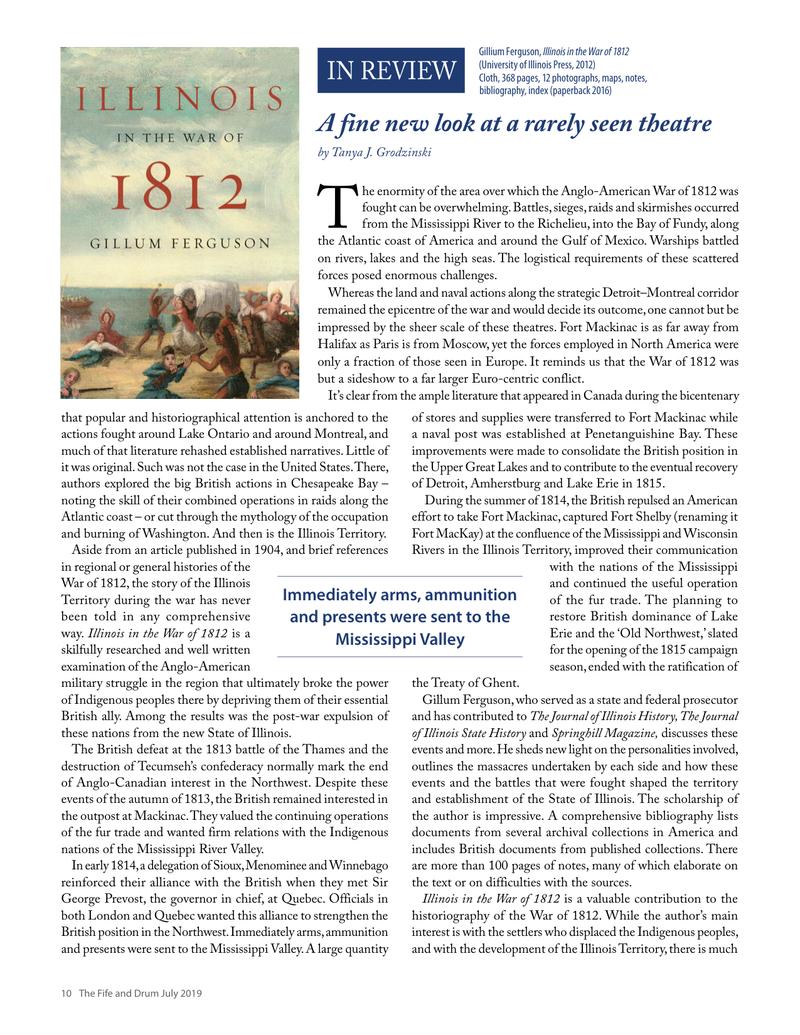
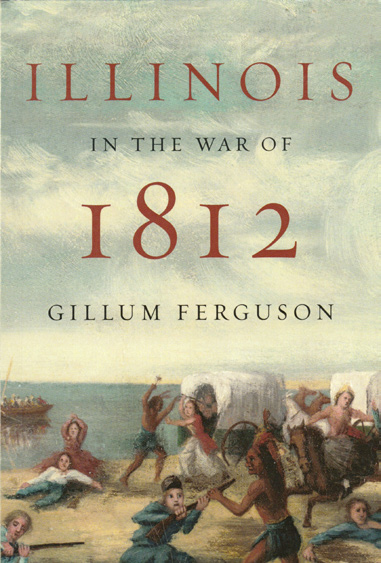
It’s clear from the ample literature that appeared in Canada during the bicentenary that popular and historiographical attention is anchored to the actions fought around Lake Ontario and around Montreal, and much of that literature rehashed established narratives. Little of it was original. Such was not the case in the United States. There, authors explored the big British actions in Chesapeake Bay – noting the skill of their combined operations in raids along the Atlantic coast – or cut through the mythology of the occupation and burning of Washington. And then is the Illinois Territory. Aside from an article published in 1904, and brief references in regional or general histories of the War of 1812, the story of the Illinois Territory during the war has never been told in any comprehensive way. Illinois in the War of 1812 is a skilfully researched and well written examination of the Anglo-American military struggle in the region that ultimately broke the power of Indigenous peoples there by depriving them of their essential British ally. Among the results was the post-war expulsion of these nations from the new State of Illinois.
The British defeat at the 1813 battle of the Thames and the destruction of Tecumseh’s confederacy normally mark the end of Anglo-Canadian interest in the Northwest. Despite these events of the autumn of 1813, the British remained interested in the outpost at Mackinac. They valued the continuing operations of the fur trade and wanted firm relations with the Indigenous nations of the Mississippi River Valley.
In early 1814, a delegation of Sioux, Menominee and Winnebago reinforced their alliance with the British when they met Sir George Prevost, the governor in chief, at Quebec. Officials in both London and Quebec wanted this alliance to strengthen the British position in the Northwest. Immediately arms, ammunition and presents were sent to the Mississippi Valley. A large quantity of stores and supplies were transferred to Fort Mackinac while a naval post was established at Penetanguishine Bay. These improvements were made to consolidate the British position in the Upper Great Lakes and to contribute to the eventual recovery of Detroit, Amherstburg and Lake Erie in 1815.
Immediately arms, ammunition and presents were sent to the Mississippi Valley
During the summer of 1814, the British repulsed an American effort to take Fort Mackinac, captured Fort Shelby (renaming it Fort MacKay) at the confluence of the Mississippi and Wisconsin Rivers in the Illinois Territory, improved their communication with the nations of the Mississippi and continued the useful operation of the fur trade. The planning to restore British dominance of Lake Erie and the ‘Old Northwest,’ slated for the opening of the 1815 campaign season, ended with the ratification of the Treaty of Ghent.
Gillum Ferguson, who served as a state and federal prosecutor and has contributed to The Journal of Illinois History, The Journal of Illinois State History and Springhill Magazine, discusses these events and more. He sheds new light on the personalities involved, outlines the massacres undertaken by each side and how these events and the battles that were fought shaped the territory and establishment of the State of Illinois. The scholarship of the author is impressive. A comprehensive bibliography lists documents from several archival collections in America and includes British documents from published collections. There are more than 100 pages of notes, many of which elaborate on the text or on difficulties with the sources.
Illinois in the War of 1812 is a valuable contribution to the historiography of the War of 1812. While the author’s main interest is with the settlers who displaced the Indigenous peoples, and with the development of the Illinois Territory, there is much
Original printed pages