

We’re currently involved in three public realm projects which, at their core, seek to expand and enrich the narrative and experience of Toronto’s founding landscape. There are a few common threads in our approach to these sites. In each case, we’re using landscape as a medium to express and interpret the multiple, overlapping and sometimes hidden histories here.
We’re aiming to support new readings of the fort within a wider framework of the evolving cityscape. We especially want to express traces of the landscape which preceded the city. Adding emphasis to 12,000 years landscape history enriches the context of the 225-year-old military story of the fort. Re-articulating the natural contours of the banks of Garrison Creek on the 2 Tecumseth site, building the promontory bluff in Lower Garrison Creek Park, and enhancing the shoreline landscape along the Bentway all create legible landforms which clarify the original topography.
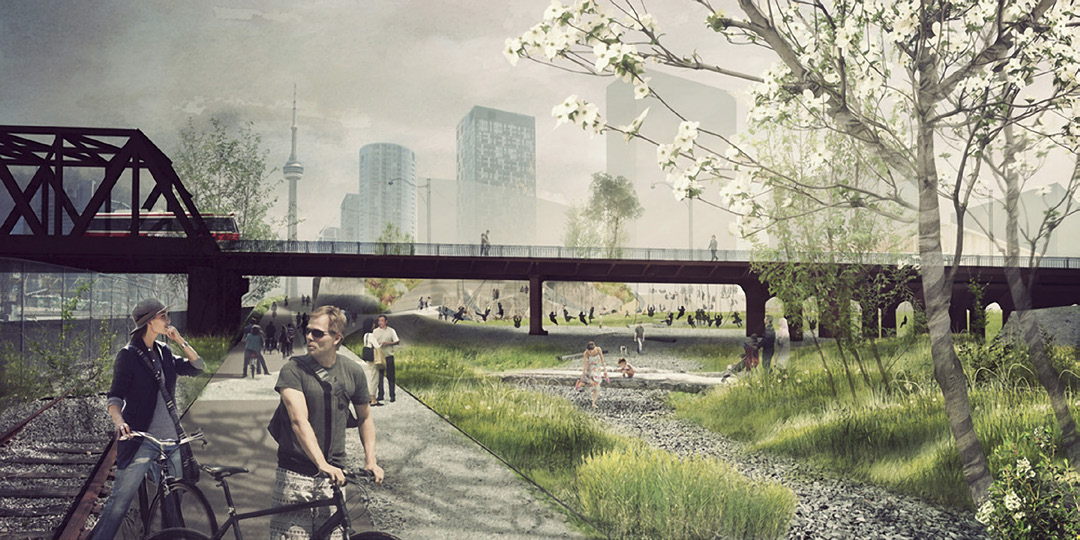
In every case we’re trying to create immersive encounters which bring history to life. The rammed-earth re-construction of the promontory at Lower Garrison Creek Park, for example, will bring a visitor face-to-face with the imposing and visceral bluff while also enabling new pathways and an archaeological play area within the remains of the former railway engine house. Topography, vegetation and hydrology are critical here. New textures in the form of plantings, creative stormwater management, and flexible public spaces – spaces equipped with the infrastructure needed to support public life, but infrastructure that is minimally intrusive – are part of each design.
Above all, every landscape is conceived to evoke traces and stories from the past even while contributing to the role and relevance of Fort York in the city today. We recognize an obligation for all works in this district to strengthen a broader reading of the cultural landscapes around this National Historic Site amidst a rapidly transforming cityscape.
Original printed pages


