

Surrounded by development, Fort York appears to be a green oasis of peace and serenity. But that would be a lie. Nature is busy there. You can see it on summer nights when groundhogs chew endlessly on the lawns. You can see it in the aerial dynamics of the swallows that swoop and dive like the Canadian Air Force, exhibiting their ability to fly in formation. In spring there is blossom, in the fall rustic colour and beating wings as the airborne head south. In the winter, while the snow is fresh, tracks reveal that coyotes and rabbits are still in on the hunt.
A nature tour of Fort York’s 41 acres might start at the west entrance off Strachan. Here you can look east over Garrison Common and its array of trees. A green habitat that was never formally designed, it remains a deliciously deciduous buffer against the concrete of the Gardiner and Liberty Village. Here the trees are large and majestic, with the look of an English park. In spring the long flowers of the non-native horse chestnut bring colour; in the fall, conkers!
Inside the fort the landscape changes; while the interior remains lawn-groomed and visitor-ready, the north, south, and eastern edges offer a different, wilder story.
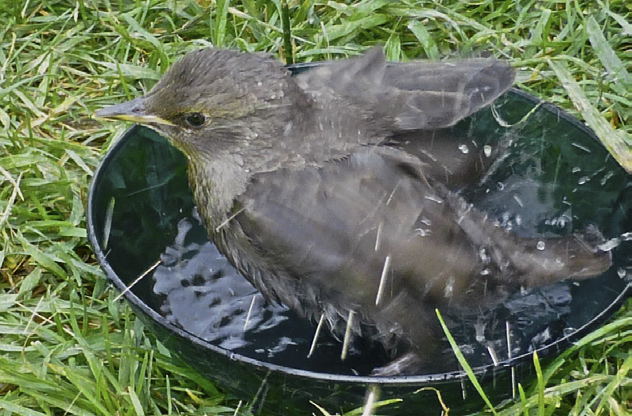
And what you may notice first are the sounds of nature. Starting in spring the grounds are a-chatter with robins and red-winged blackbirds. What brings them here? In the case of the sandpiper or redwing it is the land’s marshy Garrison Creek past. Generally drawn to watery haunts, the migratory red-winged blackbird has multiplied over the past years. In the fall, a yellow flash and the goldfinches have arrived to feast on seeds. Of course there are other birds: the common pigeon can be found pecking for grass seed, and in the late afternoon, an entire “murmuration” of starlings will blanket the grounds searching for a grubby supper. For natural insect control, the swallow does its part and visitors should rejoice. Other sightings: a hawk circling for prey and, at fall’s commencement, the Canada geese.
More colourful are the butterflies: monarchs and the look-alike viceroys, red admirals, black swallowtails, mourning cloaks, and various sulphurs, and in high summer dragonflies that sail through the air quiet as drones.
Perhaps if there is a star turn at Fort York, the star is the groundhog. And if Fort York is their theatre, then the Bathurst Street Bridge is front row with delighted pedestrians watching the kits start their explorations. Most enchanting is their “trouble is coming” pose, standing vertical as if listening for enemy footfalls; it makes one wonder whether groundhogs should be conscripted. Groundhogs are also diligent burrowers. At the head of any new tunnel you will find debris thrown up in the dig.

Then there is the rabbit. A favourite of hawks and coyotes, their population fluctuates and yet, how Beatrix Potter on a summer’s night to catch sight of a rabbit’s tail bobbing over the lawn. Or the black and white flags of skunks as they skirt a blockhouse.
As for the coyotes, when they are hungry they can be seen as late–or early–as midday, but generally they keep to the dawn and dusk hours. Last winter, a coyote crossed my path and literally, like a ghost, evaporated through the fence onto the coyote run next to the railway tracks. The fort also plays informal host to a few of the city’s homeless cats. Some pass through, others, spayed or neutered by local cat rescue, have stayed on.
And of course, not every creature in Fort York has a paw. The milk snakes that took up residence by a drain near the shop, slither.
Although the flora may be glorious at first glance, it needs attention. Capable of thwarting American soldiers, the fort has been unable to avoid an attack of invasive species; these generally arrive via birds, in the wind, or on a visitor’s shoe, and take root around the fort’s less-groomed periphery to create mayhem. Not all are bad. Some are beneficial such as healing goldenrod and milkweed which acts as host to the monarch’s caterpillars. Queen Anne’s Lace and thistle are for the birds, while the apple trees–the fruits now being foraged by the groundhogs, remind us that someone in the mid 19th century planted an orchard. There are also rushes that stand as a memorial to Garrison Creek and the marshland past. But other plants such as dog-strangling vine, Japanese knotweed, purple loosestrife, Manitoba maple, and more need to be controlled or eliminated.
Fort York is not only a national historic site but a habitat capable of being renewed with native species to educate the next generation. This requires partnerships, money, and volunteers. But ridding the fort of invasive species and returning the land to “native” would be a natural complement to the Fort’s historic architecture and military re-enactments. A place where military history and natural history might fuse in a gloriously green salute to the past.
Original printed pages


