

While an avid reader of military history and biography, I can’t claim to be an expert in either. My academic background is in political science. And, as far as my military experience is concerned, I’ve served one year as Honorary Colonel of the Queen’s York Rangers (1st American Regiment). While an enormous honour, serving in this role gives me only the most vicarious exposure to the life of a soldier.
This is all to say that the perspective I bring to the present assignment is that of an interested layman. Nothing more.
So, what does an interested layman typically find in a military biography or history? Too often a mind-numbing recitation of names, dates, troop movements, and military jargon, or, a hagiography that burnishes the reputation of some author’s long dead ancestor or personal idol. The welcome exception is a book like John Keegan’s Face of Battle which objectively informs, tells stories about real people, and always keeps the reader in the game.
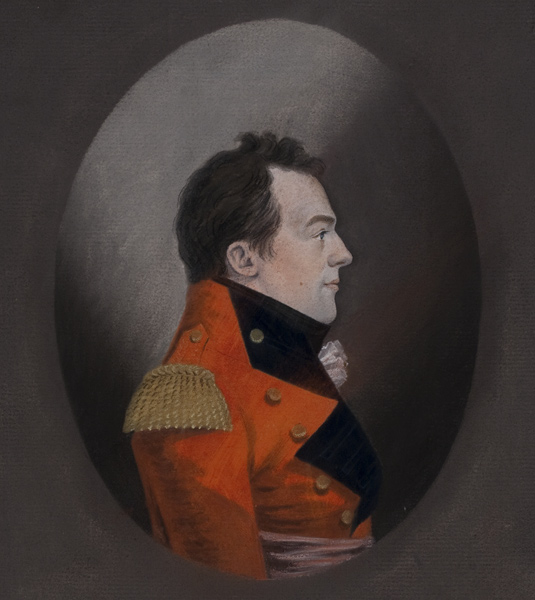
Given my trepidation, what a pleasure it was to be treated to General Jonathon Riley’s most interesting and entertaining book about the life and times of General Sir Isaac Brock, the “Saviour of Upper Canada.” Riley is a lucid and gifted writer who knows how to both inform and tell a story.
Nonetheless, the author’s impressive military credentials (Lieutenant-General British Army, Deputy Commander of ISAF in Afghanistan, several other important international command assignments, and currently Director-General and Master of the Armouries at the Tower of London) set me up for a very different book. As did Donald Graves’s claim in the foreword that this is a book by a general about a general. Frankly, I was prepared to be bored stiff. To the contrary, the Brock that emerges through Riley’s skilled story telling is a flesh and blood human being with a range of human strengths and weaknesses, operating in a very real and flawed world.
Riley starts the story of Brock’s life on the Channel Island of Guernsey, where he was born and initially educated. Brock was a “boy’s boy,” physically intimidating (6’2″, well built, and of broad proportions), and an able athlete and outdoorsman. However, Brock was more gentle giant than barroom bruiser or bully. He exuded a quiet confidence and was a natural leader from an early age. Young Isaac followed his older brother John into military service when an ensign’s commission was purchased for him in the 8th (The King’s) Regiment of Foot in the winter of 1784.
The army that the younger Brock joined at fifteen was a service in decline. England had just lost its American colonies, and its Army suffered from poor pay, irrational bureaucracy and politics, brutal discipline, and the flight of many trained soldiers. Riley’s review of these challenges, as well as the broader political issues of contemporary England, provides important context on the life experience and learning that shaped Brock’s values, as well as his motivations. Indeed, when combined with Brock’s military service in the Canadas, Barbados, Jamaica, the Netherlands, and Denmark, his family circumstances (such as the failure of his brother’s bank), and his involvement with the Freemasons, you get an understanding of what drove Brock’s “matter of honour.”
While the story of Brock’s life on its own is a worthy tale, it is the contextual material that Riley serves up that really makes this a biography worth reading. Let’s face it, while important to Canada, General Brock was no Wellington. Brock was fighting small unit engagements against opponents of the calibre of General Hull at Detroit. Wellington was commanding tens of thousands of troops and facing the world’s greatest military genius, Napoleon. Put another way, Queenston Heights was no Waterloo.
But, both Brock and Wellington operated within exactly the same institutional context–the contemporary British Army. And, this book is as much a story about that institution, its heritage and challenges, as it is a biography of Brock.
What Riley also rewards the reader with is an excellent review of contemporary British colonial administration. Understanding that any communication between “head office” (London) and the colonies took months, explains why those in charge were either torturously slow in making decisions, or out of step with current events. In today’s world of Twitter and instant messaging, it is hard to understand why it would have taken weeks for the combatants in the War of 1812 to even know that they were at war.
While Brock was an accomplished soldier by the time he reached Canada, his story really takes off when he arrives in the New World in 1802. Brock was an obedient soldier and went where he was ordered to go, but it’s clear that he pined to win glory with Wellington on the Peninsula, instead of dealing with the second-rate cast and crew he found in the colonial backwater of the “Canadas.” This is where Riley’s outsider perspective proves especially useful. He does a first-rate job of reflecting how a foreigner like Brock must have felt in early 19th-century Canada (crippling and unfathomable distances and weather, the wonder and mystery of the Native Peoples, European outcasts trying to create a bourgeois “society” in Quebec and the new Upper Canada). Frankly, I wonder if a Canadian author would have been able to capture and communicate these observations and feelings as well and as objectively as Riley does.
The next decade of Brock’s life was essentially preparation for his year of glory, 1812. And, this is where Riley’s unique perspective again proves useful. This time it’s the insights that General Riley learned from serving in theatres of operation where the challenge was winning the hearts and minds of indigenous populations, and defeating local insurgents. In Brock’s case this involved building relationships with local Aboriginal tribes as well as with “loyalists” in Upper Canada. Keep in mind that the Loyalists were all former residents of the new United States and likely had as much in common with their Republican brethren south of the border, as they did with the colonial administration in Quebec. While there were many who sided with the King against the rebels, just as many came to Canada for cheap land and lower taxes. In other words, they were just as likely to be economic opportunists as they were to be true loyalists, and just as likely to like the stars and bars as they were to the Crown.
During this decade Brock developed both the plan and the essential resources that led to the string of victories against the American invaders in the first phase of the war. This included strengthening relationships with the Native Peoples, building a local militia, deploying British regulars where they would do the most good (at choke points on the main water routes), and developing a Great Lakes naval capability to deliver his miniscule land forces when and where they were needed. Much of this required Brock to ignore the directions of colonial administrators in Quebec who firmly believed that the best strategy would be to abandon Upper Canada if the United States attacked. This is when the poor communications and difficult travel worked to Brock’s advantage.
When war does come, we get to see what an inspired and effective battlefield commander he really was. Brock, brave and aggressive to a fault, up against the timid and fickle Hull, won easily at Detroit where he used a combined force of regulars, militia, and Natives to defeat a superior force that had the benefit of both greater numbers and significant fortifications. And, he basically did it with a bluff. Riley’s writing here is first-rate, hard to put down. There’s enough detail and description to please the military history expert, and enough drama and humanity to keep it interesting for the lay reader.
The last section of the book is about the Battle of Queenston Heights and the death of Brock. Again, Riley provides a cracking narrative of the battle that gives all the important facts and perspectives (including from the American side). But, the real purpose of this section is to explain (to paraphrase Riley) why Brock felt it necessary to the doing the work of a captain (leading a platoon in a nearly suicidal frontal assault against an enemy that had the benefit of cover). To Riley, it was simply “a matter of honour.” Yes, it was also the result of Brock’s impulsiveness, but Brock was truly a product of a military system that regularly saw generals succumbing under similar circumstances (five British generals were killed in action or died of wounds in 1812 alone).
So, in the end, in spite of the extraordinary achievements and tragic death of Brock, Riley’s conclusion is that he was just doing what he was programmed to do. Yes, he may have done it better than many, and the results of his actions had a profound impact on our country, but Brock was only doing his duty, as any of the best British generals would.
There are only two shortcomings in this excellent book. First, there isn’t a lot about “Brock the man” here. You get some observations about Brock’s human frailties–his ambition, his impetuousness, but not much beyond that. But, given that the contemporary record for Brock is thin, it is reasonable that Riley’s portrayal lacks some depth and dimensionality. This is not the fault of the author who can only work with what he has. And, thankfully, Riley doesn’t follow the fashion of putting his subject on the couch and attempting psychoanalysis from a distance.
The second is more an editorial note than a flaw. Riley’s use of footnotes and extended major characters throughout the book is excessive and distracting, especially the ones that communicate only basic or tangential information. It is almost as if Riley felt a need to share all of his research, relevant or not. Since it’s an editor’s job to restrain an author, I don’t blame Riley for this.
To conclude, I would recommend this book unreservedly to anyone interested in the history of the War of 1812. But, I would also recommend it to anyone interested in a unique and worthwhile perspective on either the British military at the turn of the 19th century, or colonial administration (Canada or otherwise) of the same time period. This excellent book would be a fine addition to your library.
Original printed pages


