

The largest number of francophone soldiers in the history of colonial Toronto served under British command, at Fort York, between the 1790s and 1810s in regiments raised in Canada. Yet, there was a French-led military presence here during the 1750s, at Fort Rouillé, when southern Ontario formed part of New France. That post stood near today’s Bandshell inside Exhibition Place, and its story connects deeply to Native-newcomer relations during the struggles between Great Britain and France for control of the vast North American interior.

Fort Rouillé was a French royal post and dependency of Fort Niagara across Lake Ontario (in modern Youngstown, New York). Its name honoured Antoine Louis Rouillé, Comte de Jouy, who served as secretary of state for the navy from 1749 to 1754 and then as foreign secretary until 1756. People usually referred to the post as le fort royal de Toronto, or Fort Toronto, and occasionally, as Fort Saint-Victor.
It anchored the southern end of the Toronto Passage, an ancient water and portage route between Lake Ontario and Georgian Bay. From this strategic location, Fort Rouillé provided a base for Franco-Indigenous diplomacy and trade. At a secondary level, it helped to meet French logistical needs as soldiers, sailors, and others travelled across the Great Lakes.
From some point in the 1600s, French traders had set up short-term camps along the Toronto Passage. In the 1720s, a government-licensed Magasin royal stood near the south end of the Toronto Passage on the Humber River. It was one of three such posts founded then, with the others established at the eastern end of Lake Ontario and on the Niagara River. The magasin likely consisted of one or two modest buildings surrounded by a stockade to house a few men and their supplies. Beyond trade, the authorities wanted to use their Toronto post to maintain good relations with the local Mississaugas and people from farther north who journeyed between the upper and lower lakes along the passage. Nevertheless, both before the French abandoned it about the year 1730, and then afterward, Natives often travelled around Lake Ontario to trade with the British at Oswego in New York. Some even allied with Anglo-Americans against France and its Indigenous allies during the War of Austrian Succession in the 1740s. Yet others, such as 65 men from the Toronto area, fought alongside French forces in 1745 and 1746.
As part of subsequent efforts to undermine their imperial rival, the French decided in 1749 to build an entire series of posts. Among them was a small stockaded fort on the Humber, which they built in 1750. They hoped it would help cut one of the links between Oswego and the First Nations north of Lake Ontario, and perhaps even make the competing post unprofitable so that the British would abandon it. The French also thought they could cultivate good relations with the Mississaugas and thereby encourage warriors to fight alongside them in a future conflict with Great Britain.
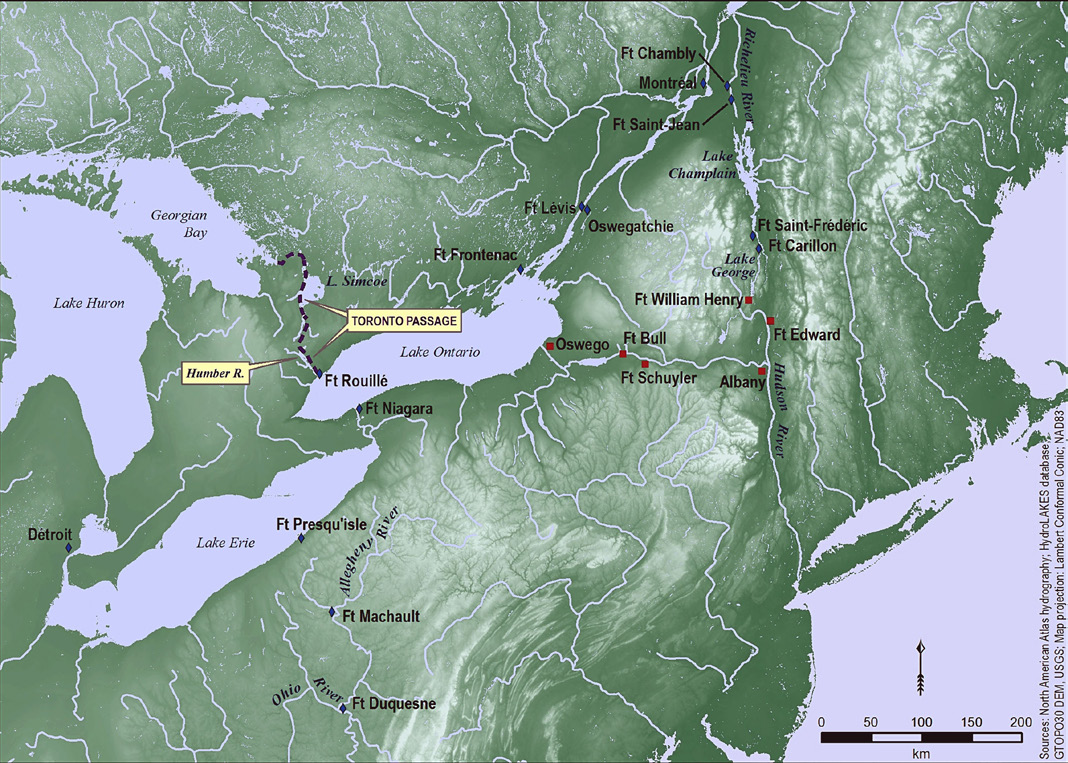
Almost immediately, the volume of trade exceeded expectations. Thus, the newcomers found they could not lay up enough stock to exchange for furs, venison, canoes, fish and bear oil and other Indigenous goods. Native people, to the delight of their French trading partners, even suggested that they might stop visiting Oswego if the post at Toronto could meet their needs for Euro-American supplies. At the same time, officials worried that their new establishment was too small for the garrison of around 15 soldiers (accompanied by a few workmen and some women from time to time). Therefore, they replaced it with a larger one – Fort Rouillé – which also had the advantage of being more defensible should Franco-Indigenous relations degenerate into armed conflict, as seemed possible given the numerous tensions that existed between Natives and newcomers.
Fort Rouillé formed part of a chain of military works that the French hoped would project power throughout the Great Lakes
Construction on Fort Rouillé began in September 1750 several kilometres to the east of the Humber River on a four- or five-metre-high bank overlooking Lake Ontario. The lake at that spot was not suitable for shipping because of a large flat offshore rock. That feature enhanced the site’s security against a naval assault but required sailing vessels to anchor to the east or west. Workmen completed most of their tasks by the spring of 1751, although they added more buildings later. Much of the cut timber, ironwork and other materials had to be shipped from Port Frontenac (at present-day Kingston). The basic technique used to assemble the buildings was pièce-sur-pièce, a method of raising walls by inserting horizontal squared timbers into upright wooden frames. The defensive walls, at least in part, likely were constructed in stockade fashion, as one period source called them “upright piles.” The otherwise-square fort had pointed bastions at the corners. The distance from the tip of one bastion to another was about 40 metres. The site seems to have been armed with at least four small guns or other kinds of small artillery pieces.
The men of the garrison cut down trees around the fort to use for construction and firewood as well as to improve security by creating an open field of fire. This open area also provided space for the garden, cemetery and other landscape components associated with such posts. There were five or six main buildings inside the defences along with some structures beyond the walls. As a dependency of Fort Niagara, it formed part of a chain of military works that the French hoped would project power throughout the Great Lakes in support of their colonial ambitions. The resources devoted to this grand scheme, however, were modest, and more hardly maintained. Major Anne-Joseph-Hyppolite de Mures de Malartic said of Fort Rouillé in 1756 and declared that it was “in a bad condition.”
Earlier, in 1752, when a Roman Catholic priest, François Picquet, visited Toronto, he found that “there is no scarcity in this fort; there is everything in abundance, excellent bread.” In contrast, the Mississaugas complained that the post was nothing more than a brandy shop. Instead, they wanted to have a mission settlement established to serve their needs like one Picquet had founded in 1749 among the Six Nations Haudenosaunee (or Iroquois) on the St. Lawrence River at Oswegatchie (in modern Ogdensburg, New York). Their comments likely represented protests against both the more favourable treatment the Six Nations received as well as alcohol’s destructive impact on their society, as Euro-American traders regularly and ruthlessly used brandy, rum and whisky to maximize their profits rather than sell useful items at smaller margins.
Traders regularly and ruthlessly used brandy, rum and whisky to maximize their profits
Native opinions also suggest that the French subverted their diplomatic intentions through their parsimonious investment at Toronto. Picquet responded by saying that the Mississaugas had not received religious attention because they had not shown any interest in Christianity (while overlooking the diplomatic threat of other hostile interests in a mission could provide to an Indigenous population). Nevertheless, he was willing to invite them to move to Oswegatchie, but his superiors ordered him to confine his work to the Haudenosaunee instead.
The establishment at Toronto was reasonably successful in terms of trade but much of it came at the expense of Niagara and other French posts rather than at the expense of the British. This was due, in part, to its convenient location, but also because Anglo-American goods generally were more competitive in price and quality, even when the French sold things at a loss to promote their Native alliances. In 1757, for instance, business at Fort Rouillé produced 150 bales of furs (each commonly weighing about 90 kilograms); by contrast, traders assembled fewer than 30 bales at Fort Frontenac and 250 at the much larger Fort Niagara.
The trade at Toronto belongs to Jean-Victor Varin de La Marre, a senior office-holder in New France. Like many of his peers in the middle and upper echelons of the colony, La Marre used his position to embezzle goods and otherwise illegally promote his financial interests at the expense of the government’s agenda and the treasury and the needs of the population in general.
The Seven Years War broke out in North America in 1754 (and then two years later in Europe). Despite its limitations, Fort Rouillé demonstrated its worth in 1756 when some Mississaugas who frequented the post agreed to participate in an attack on Oswego, which the British had not abandoned as French officials had hoped, but which fell after a short siege. (That victory even suggested that some Haudenosaunee in New York might trade with such a French across the lake.) The destruction of Oswego was not the only combat the Mississaugas saw. The historical record is fragmentary, but other references to their actions appear from time to time. On another occasion in 1756, for instance, Maures de Malartic saw three British prisoners and nine scalps taken by a Mississauga war party that had attacked a boat along the south shore of Lake Ontario.
Nevertheless, Franco-Native alliances were precarious. In the spring of 1757, 90 Mississauga warriors surrounded Fort Rouillé and threatened to destroy the post and kill a 12-man garrison under the command of Lieutenant Charles-Joseph de Noyelles. Two people from the fort got away in a canoe to seek help at Fort Niagara. Its commandant, Captain Pierre Pouchot, recorded that he immediately dispatched 63 soldiers and ten whaleboats (each armed with a swivel gun) to rescue the garrison. As the boats passed the warriors’ camp at the fort, he was told, the Natives fired a “salute” to demonstrate their power and try to end the crisis.
Another account, by Captain Louis-Antoine de Bougainville, added that some Potawatomies, who had been wintering at Niagara, accompanied the French force and “contributed not a little” in quieting the quarrel.
Mississauga warriors surrounded Fort Rouillé and threatened to destroy the post
Paradoxically, the warriors who threatened the post were French allies preparing to attack Fort William Henry in New York along the Montreal-to-Albany corridor, but who planned to pillage the stores at Toronto on their way east. According to Euro-American sources, the Mississaugas, who decided against assaulting Rouillé, thought once its garrison had been reinforced, said they had been motivated by false news that the French had sent troops to North America to kill them, had made treaties with the Mississaugas’ Native enemies, or had been beaten by the British in the east.
Given that our only records are French, and given what we know about Indigenous-newcomer relations in general, we might wonder if the people in the garrison had orchestrated the warriors, thus bringing the crisis upon themselves to some degree. For instance, they may not have shown the generosity expected of allies, such as by failing to give them enough supplies and presents for the expedition against the British. (At the time, gifts not only were important in diplomacy as demonstrations of respect and friendship, but also comprised a significant portion of the Euro-American goods that Indigenous people acquired to support their material well-being.) Unfortunately, we know little about the Potawatomis’ role beyond Bougainville’s brief comment; but the presence of these Algonquian-speaking people from the lands to the west of the Detroit River underscores how interwoven diplomatic and other relations were across a wide range of cultures throughout the Great Lakes region.
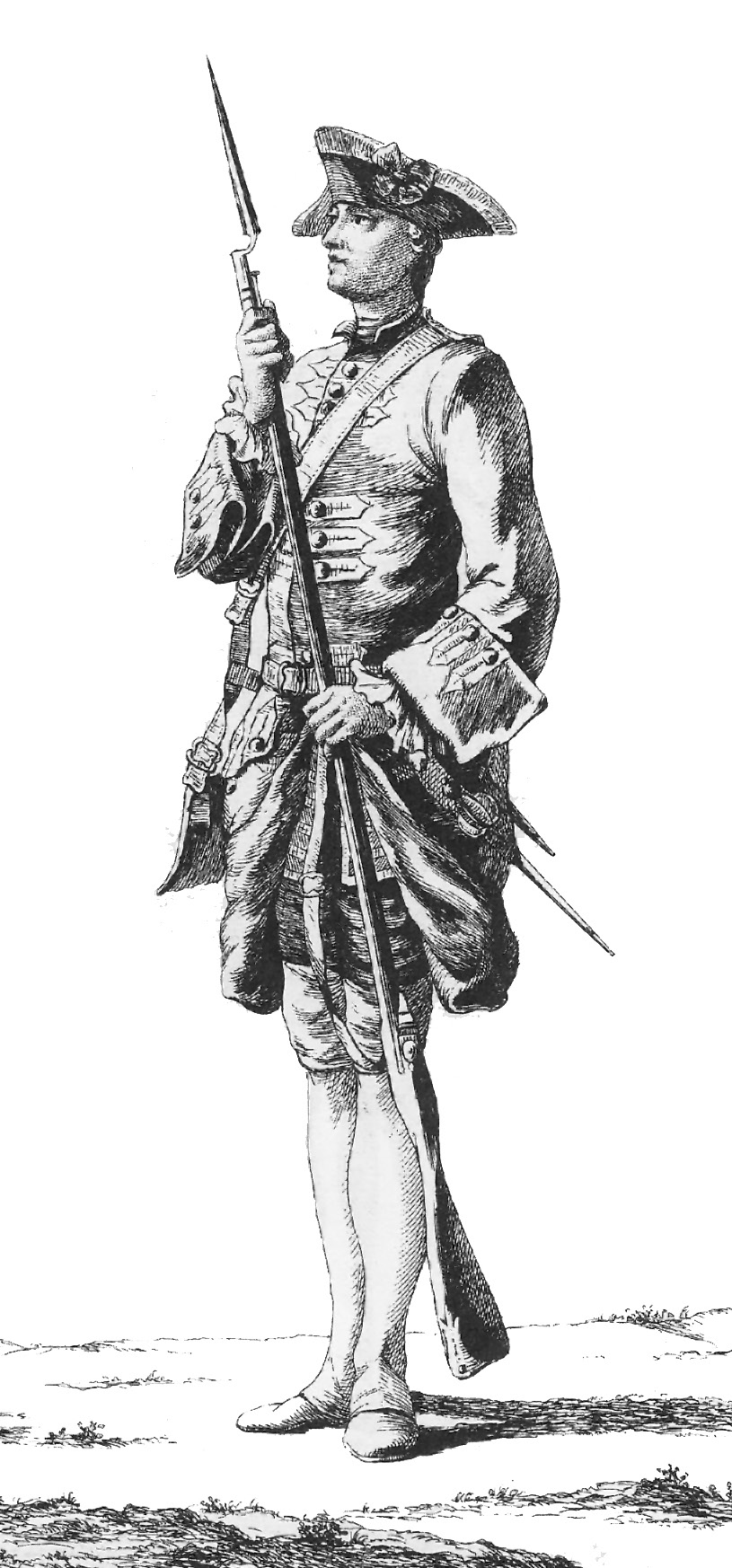
Despite the confrontation, the Mississaugas then travelled to Lake George, and according to Pouchot, “conducted themselves well,” being “more dangerous” combatants than the Haudenosaunee. Other Mississaugas disowned the behaviour of those who had threatened Fort Rouillé, which speaks to the diversity of opinion that existed within the First Nations as they considered how best to protect their interests amidst the uncertainties and violence of 18th-century North America.
Likely unbeknown to the garrison at Fort Rouillé, a Shawnee leader, Paxinosa, also tried to organize an assault against the post at around the same time with warriors recruited from south of Lake Ontario and by claiming came of his plan.
The capture of Oswego in 1756 gave the French some relief from the threat of imminent assault from British forces, but the strategic situation changed soon afterward. Smallpox swept through the region over several years during the war, killing a great many people, including Mississaugas. In 1757 there was a widespread crop failure, which deepened Native and newcomer suffering. In 1758, the British reoccupied Oswego and then captured both Fort Frontenac and the French Lake Ontario squadron, along with desperately needed supplies intended for the fur trade and for preserving Franco-Indigenous alliances.
These events magnified Fort Rouillé’s isolation and vulnerability. As the strategic situation deteriorated, the men of its garrison found themselves unable to meet Native demands for goods. This was due to both the immediate losses in the region and the Royal Navy’s effort to isolate New France. As the situation became increasingly perilous in 1758, the commandant at Fort Rouillé received orders to burn his post and retire to Fort Niagara if the British were to threaten him.
A year later, new orders directed him to recruit as many Mississauga and other warriors as he could and send them to reinforce Niagara if the British were to advance against the larger post. Yet, it was unlikely that many Natives would choose at this stage to assist the French. Not only had they been weakened by disease and hunger, the people north of Lake Ontario also saw the British gaining the ascendancy, had their own grievances with the French, and noted that more and more Indigenous people to the south were choosing to align with King George II as the power of King Louis XV crumbled. In fact, Mississauga and other Anishinabe (or Ojibwa) diplomats from southern Ontario already had opened negotiations with the British as Natives debated whether to ally with one Euro-American power or the other, play the two off each other, or embrace neutrality.
On July 6, 1759, the British and their Haudenosaunee allies began a siege of Fort Niagara. Only a modest number of Mississaugas came to the aid of the French garrison. Meanwhile, French officers south of Lake Erie dispatched a relief force but the British destroyed the 1,500-man contingent almost within sight of the fort on July 24.
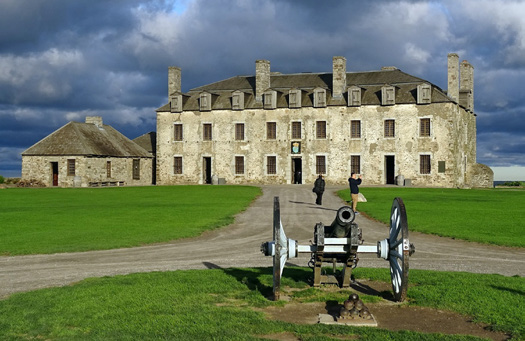
Realizing that this disaster rendered his position untenable, Captain Pouchot surrendered to the opposing commander, Sir William Johnson, who took possession of Fort Niagara on July 25. Among those captured were two women whose identity is unclear but who were relatives of the commandant of Fort Rouillé at the time, Captain Alexander Dagneau Douville de Quindre, on the St. Lawrence River when their British escort turned them over to French scouts, who then took them to Montreal.
the French “had burned and abandoned that post, and destroyed many things which they could not carry along”
On July 27, Johnson sent 30 soldiers in three whaleboats across the Ontario to reconnoitre Fort Rouillé. They discovered only a smoking ruin. According to Euro-American sources, Lieutenant Turbutt Francis, the French “had burned and abandoned that post, and destroyed many things which they could not carry along, viz. working utensils, arms, etc.” Earlier, Captain Douville had assumed that Niagara had fallen once he no longer heard the sound of artillery fire across the lake. With his 15 men in Toronto facing a hopeless situation, he decided to retire to Montreal.
Lieutenant Francis’s men arrived back to Niagara on July 30. Mississauga chief Tequakareigh accompanied them. He had fought as a French ally but now wanted to protect his people’s interests through forming an alliance and improving the trading relationship with the ascendant British, and thus hoped to meet them there. After negotiations, William Johnson Tequakareigh transported back across the lake, accompanied by British representatives who invited the Mississaugas as a whole to embrace the new connection. Nevertheless, some Mississaugas continued to fight alongside the French for a time. A few years later, many of them took part in an Anglo-Mississauga alliance in the Pontiac War of 1763-64, when First Nations around the Great Lakes used force to defend their lands and societies against increasing British encroachments.
With the surrender of Niagara in the summer of 1759, the French destroyed and evacuated other posts in the region during the next few weeks. Among other calamities to strike them, the greatest was the fall of Quebec in September. Then, in 1760, Montreal capitulated. In the Treaty of Paris of 1763, France transferred most of its North American possessions to Great Britain.
People explored the ruins of Fort Rouillé in the decades following the dramatic events of the 1750s. The earliest record of such a visit dates to 1760, when Major Robert Rogers (of ‘Rogers’ Rangers fame) stopped briefly in Toronto while sailing west to take possession of Detroit as part of the surrender of Canada. In his famous journal, published in 1765, he remembered that deer were “extremely plenty,” thought Toronto was a good place for a trading post, and noted that there were (a rather startling) 300 acres of open ground around the site.
Much of the land around the fort’s ruins remained clear of trees decades later, in 1813, when the Americans attacked the British colonial town of York that had been founded in 1793. The invaders intended to land their troops at the clearing from their naval squadron but high winds blew their boats farther west (to the area north of today’s Boulevard Club in Parkdale).
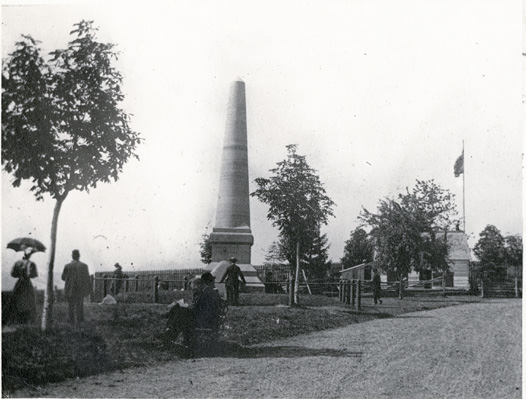
As the 19th century progressed, people continued to visit the remains of the French presence. Southerly components of the site retreated into the lake through erosion, although building materials, animal bones and other objects from the fort could be seen to the north-east where they had tumbled out of the bank above. (Most of the land to the south of the site today is later lake fill.) In 1878, workers graded the visible remnants of the post out of existence when they prepared the ground for the Toronto Industrial Exhibition of the following year. Nevertheless, individuals concerned to preserve the fort’s story erected an inscribed boulder at the time of the landscaping. Today, there are several monuments and plaques of varying levels of accuracy to mark Fort Rouillé’s history, including a large commemorative plinth from the 1880s. There also is a concrete outline of the fort’s walls on the ground, the location of which had been detected through archaeological investigations conducted between 1979 and 1982.
In modern times, people occasionally recommended that Fort Rouillé be reconstructed as a heritage site. However, we simply do not (and cannot) know enough about the post’s physical characteristics to create a credible representation. As an attraction, a reconstruction would be too similar to Fort York in its location, its operating costs (even recognizing that such facilities always need to be subsidized) and likely would draw funds away from existing heritage resources. Yet, the interpretation could be improved, such as through carefully curated outdoor display panels, which might be designed to link visitors to online sources through QR or electronic devices. During periods of high visitation – such as the annual Canadian National Exhibition – pop-up displays and programming might be presented to explore the Franco-Indigenous story of the fort.
In visiting the western end of Exhibition Place today, it is hard to imagine either the physical or the cultural landscapes that once existed when Native and newcomer traders met each other at Fort Rouillé in the middle of the 18th century. Nevertheless, we are fortunate that some of its archaeological resources have been explored and that others remain below ground for future examination, and that the site has been commemorated to tell its story on the spot where some of the key unfolding events in Toronto’s pre-urban history transpired.
Further Reading on Fort Rouillé
Beyond basic summaries in local and other histories, literature on Fort Rouillé is sparse, but there are some easily accessible publications available to those who want to pursue its story further. The post dominates two chapters of Percy Robinson’s Toronto during the French Régime, second edition (University of Toronto Press, 1965). A commemorative study reflecting Victorian values is found in Percy Scadding’s History of the Old French Fort and its Monument (Copp Clark, 1887). An archaeological assessment, which includes a bibliography of historical and documentary sources, is Donald Brown’s Fort Rouillé Excavations (Learnxs Press, 1983). Dr. Brown also wrote an article that situates the fort in its larger historical context: “French Occupation of the Lakes Ontario and Erie Drainage Basins, 1650-1760,” Northeast Historical Archaeology 14 (1985), which is available online.
Although centred on Fort Niagara, an outstanding primary French source on the Seven Years War that mentions the site, explores the larger context in which its garrison played a part, and notes the Mississaugas at Pierre Pouchot’s Memoirs on the Late War in North America (1781), annotated by Brian Dunnigan and translated by Michael Cardy, second edition (Old Fort Niagara Association, 2004). Fort Rouillé does not appear much in British records, but some Toronto-centred primary documents may be seen in James H. Coyne, editor, The Papers of Sir William Johnson, 14 vols. (State University of New York, 1921-65). The Johnson papers include information on the burning of the post and Tequakareigh’s negotiations with the British as well as data on the fur trade in Toronto afterward during the historically chaotic 1760s and 1770s.
A general history of the Mississaugas and other Anishinabek (who had replaced Iroquoian-speaking peoples in the Toronto region toward the end of the 17th century) is Peter Schmalz’s Ojibwa of Southern Ontario (University of Toronto Press, 1991). A very detailed scholarly study of the complexities of Native-newcomer relations is Richard White’s The Middle Ground: Indians, Empires, and Republics in the Great Lakes Region, 1650-1815 (Cambridge University Press, 1991). A solid one-volume history of the Seven Years War is Fred Anderson’s Crucible of War (Knopf, 2000).
Original printed pages


