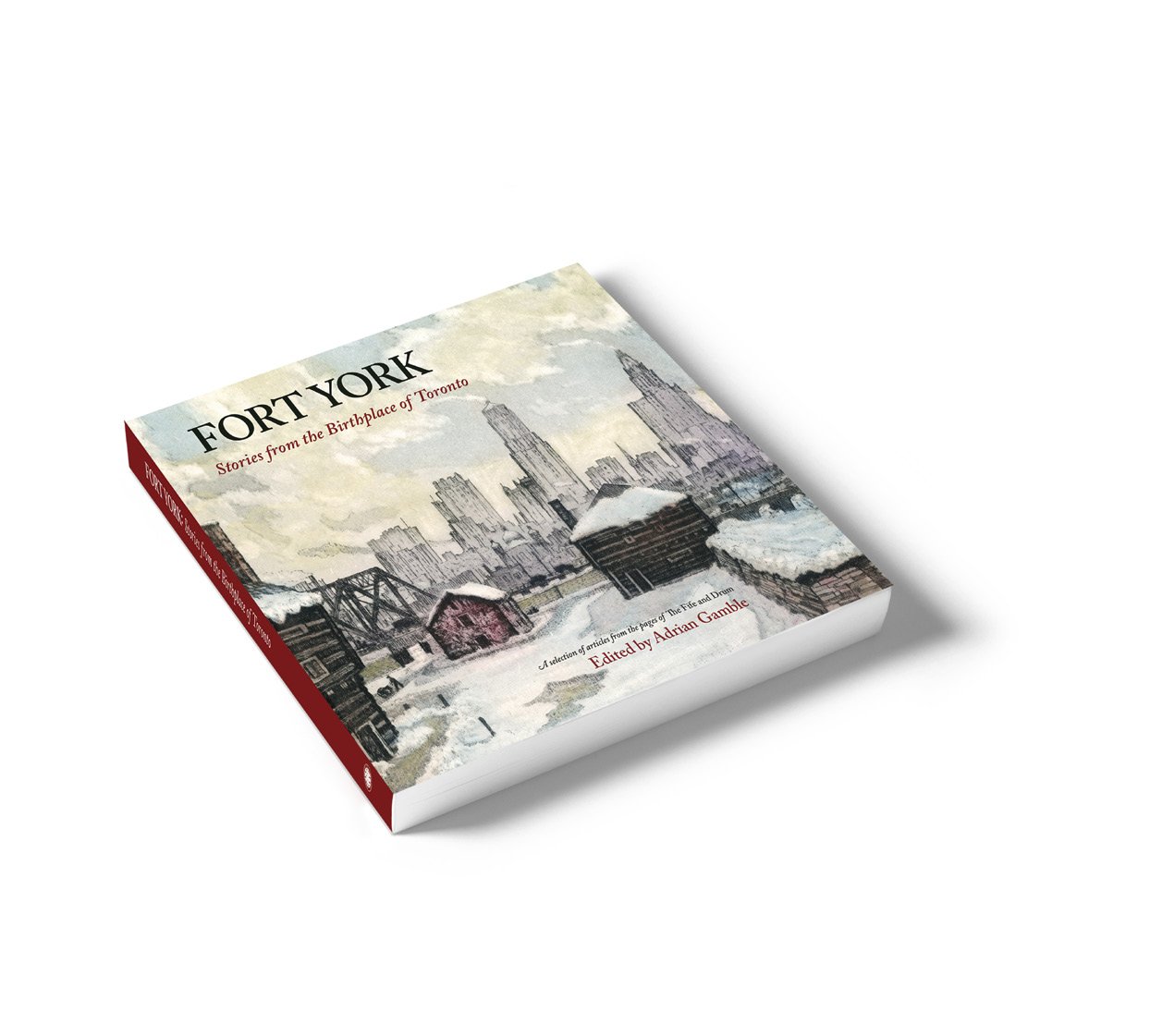
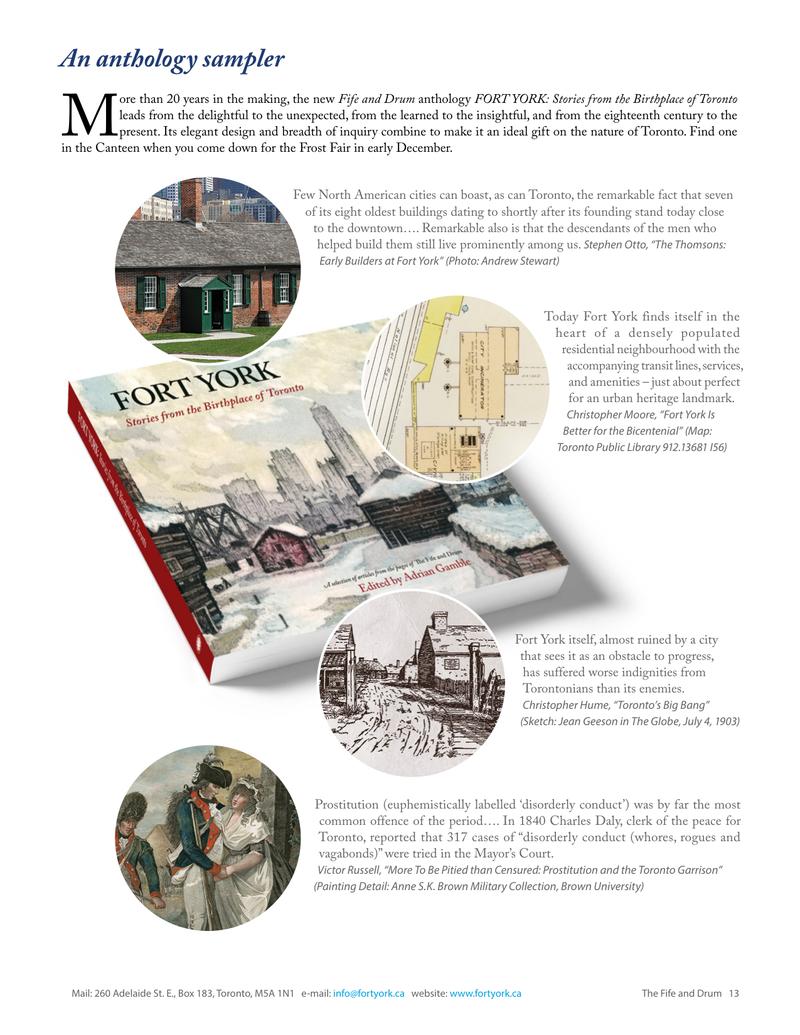
More than 20 years in the making, the new Fife and Drum anthology FORT YORK: Stories from the Birthplace of Toronto leads from the delightful to the unexpected, from the learned to the insightful, and from the eighteenth century to the present. Its elegant design and breadth of inquiry combine to make it an ideal gift on the nature of Toronto. Find one in the Canteen when you come down for the Frost Fair in early December.
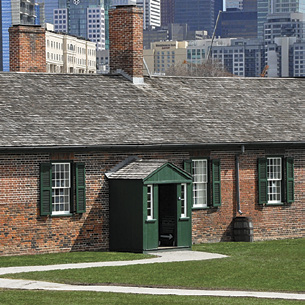
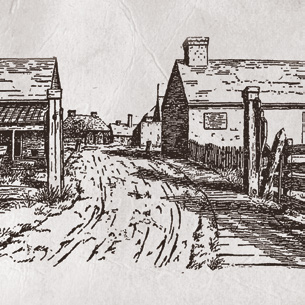
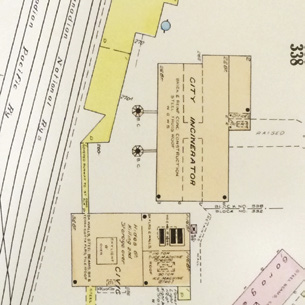
Few North American cities can boast, as can Toronto, the remarkable fact that seven of its eight oldest buildings dating to shortly after its founding stand today close to the downtown…. Remarkable also is that the descendants of the men who helped build them still live prominently among us. Stephen Otto, “The Thomsons: Early Builders at Fort York” (Photo: Andrew Stewart)Today Fort York finds itself in the heart of a densely populated residential neighbourhood with the accompanying transit lines, services, and amenities – just about perfect for an urban heritage landmark. Christopher Moore, “Fort York Is Better for the Bicentenial” (Map: Toronto Public Library 912.13681 I56)Fort York itself, almost ruined by a city that sees it as an obstacle to progress, has suffered worse indignities from Torontonians than its enemies. Christopher Hume, “Toronto’s Big Bang” (Sketch: Jean Geeson in The Globe, July 4, 1903)Prostitution (euphemistically labelled ‘disorderly conduct’) was by far the most common offence of the period…. In 1840 Charles Daly, clerk of the peace for Toronto, reported that 317 cases of “disorderly conduct (whores, rogues and vagabonds)” were tried in the Mayor’s Court. Victor Russell, “More To Be Pitied than Censured: Prostitution and the Toronto Garrison” (Painting Detail: Anne S.K. Brown Military Collection, Brown University)