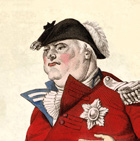
It was late, nearly midnight, on 5 September 1865 when Mr. Attorney General John A. Macdonald stood in the Legislative Assembly of the Province of Canada to present a bill entitled An Act for the prevention of contagious diseases at certain Military and Naval stations in this province. The act received royal assent on September 18 (29 Vic. 1865, C.8).
Macdonald was no doubt acting at the behest of British authorities. The previous summer, on 29 July 1864, the British Parliament had passed the first Contagious Diseases Act. That legislation and the subsequent bill in Canada originated with the military and both “were intended to control the high rates of venereal disease, namely syphilis and gonorrhea, within the armed forces through the sanitary regulation of prostitutes.” Statistical evidence had convinced military leaders that something had to be done, not on moral grounds, but rather for two more practical reasons: the high cost of treatment and the loss of manpower due to illness. By 1860 the annual cost to the navy was calculated at more than £20,000 to treat sailors with venereal disease. As for the British army scattered around the world, one of every three army hospital patients was said to suffer from a venereal complaint.
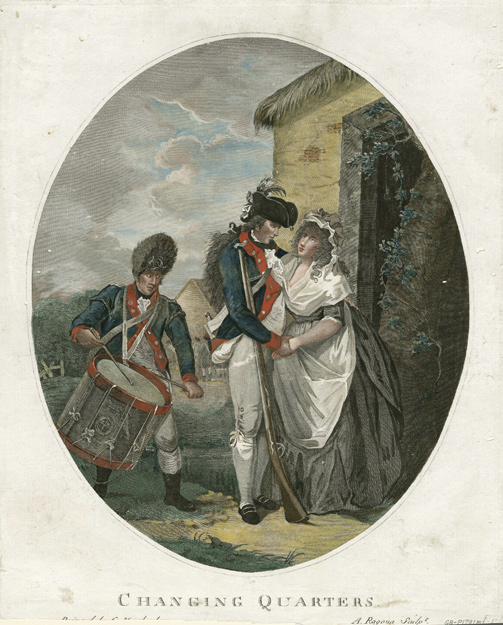
Credit: Anne S.K. Brown Military Collection, Brown University, Providence, RI
Toronto had always been a garrison town and like other outposts of the British Empire, the local garrison too suffered from a high incidence of venereal disease. It was estimated that between 1837 and 1847 more than 25 per cent of soldiers admitted to the military hospital here suffered from sexually transmitted diseases. By 1859, the number had grown to 42 per cent.
Prostitution had been a fact of life in Toronto virtually from its founding. As early as January 1804, Elizabeth Ellis and her husband Stephen were arrested for operating a “bawdy house” in a town with a garrison of 200 and a population of just 400. Mr. Ellis was not prosecuted, but Mrs. Ellis received a harsh sentence indeed: six months in the jail and two, two-hour sessions in the pillory on market days. Nevertheless, by the 1830s, notorious women such as “Steam Boat Mary” openly plied their trade on York Street near the waterfront and in 1834 the city’s first mayor, William Lyon Mackenzie, became embroiled in controversy when he sentenced two prostitutes to jail. In 1847, Toronto mayor and Tory luminary, William Henry Boulton of “The Grange,” became the victim of innuendo and controversy when a man named Daniel Bloxsom was arrested for keeping a bawdy house. Turns out, Mayor Boulton owned the house and political opponents quickly accused him of living off the avails of prostitution.
Police and Police Court records for the mid-nineteenth century indicate that prostitution (euphemistically labelled “disorderly conduct”) was by far the most common offence of the period with hundreds of charges per year. In 1840 Charles Daly, clerk of the peace for Toronto, reported that 317 cases of “disorderly conduct (whores, rogues and vagabonds)” were tried in the Mayor’s Court. By 1857 the number of “disorderly” arrests involving women had increased to 675 with an additional forty-four cases of women charged with “keeping a disorderly house.”
Typically, the women plied their trade by patrolling certain infamous streets, operating or occupying a bawdy house, or more commonly, “touring” open spaces on the edges of town. Extending over some 500 acres in 1851 the Garrison Common, close to the Fort with its hundreds of potential customers, was an ideal location for such activity. Not surprisingly (as noted by Aldona Sendzikas in Stanley Barracks [see Fife and Drum July 2011]) the Garrison Common became “one of the most frequently patrolled areas of Toronto by constables in search of disorderly characters” and most of those arrested were women. On one patrol in August 1850, nine women were removed from the Common to jail.
By the 1860s the pattern of “disorderly conduct” continued as women were routinely arrested on or near the Common. For example in August 1864, Annie Chetanaw and Elizabeth Stuart, “two girls of the town,” were arrested near the Garrison and sent to jail for four months. That same month, Mary Charley was arrested “out near the Crystal Palace,” on the northern edge of the Common.
Throughout the period, officials were vigilant about the women frequenting this area. A case in point: in early June 1864, Casimir S. Gzowski, president of the Toronto Rifle Association, announced that arrangements were well underway for a week-long shooting competition to be held on the Garrison Common. The night before the big event, on the evening of June 20, local constables did their part to prepare for the arrival of participants and dignitaries by arresting “a portion of the frequenters of the garrison common.” That is, they arrested the prostitutes that regularly trolled there for customers.
The following day, as the visitors arrived and competition began, Mary Lee, Ellen Hill, Mary Ann Smith, and Ellen Blore (sic) appeared in Police Court on the other side of town before Magistrate George Boomer on a charge of disorderly conduct. To ensure that the ladies of the Garrison Common were out of the way for the big event, Boomer sentenced them to four months in jail.
To a large degree, an unabashed double standard prevents a more accurate account of the activity of the soldiers on the Common or their interaction with the prostitutes. There is a famous (or infamous) incident in June 1849 when a group of soldiers of the Rifle Brigade protected the women by attacking three constables sent to round up them up. While female “frequenters” of the Garrison Common regularly appear in Police Court, garrison soldiers were not charged unless unduly “rowdy.”
To be sure, the men were involved in the street life of the city and from time to time would show up in Police Court for various offences. This was especially evident during the 1860s when the garrison had increased to some 1,200 men. For example in August 1864 James Cleary of the 16th Regiment was arrested for “insulting females” on the street outside a tavern. That same month, John Lovedon, a private in the 16th, was arrested on Palace Street for being drunk and disorderly. A month later, Michael Malone of the 16th was arrested for disorderly conduct and appeared in Police Court with his sergeant. Typically, these cases were discharged by the magistrate and the prisoner released—no doubt to face military discipline.
While it appears that local military authorities tolerated the women as long as they remained on the periphery of the Common, there were cases of military personnel taking action. In May 1867 Eliza Nolan “an old offender” was apprehended by police “near the military quarters” on a complaint by Gunner Smith of the Royal Artillery; similarly Margaret McLeod “an abandoned girl” was arrested “as a disorderly” after a complaint by Sergeant Webster of the 17th; in July 1868, Minnie Logan and Mary Waybrant appeared in Police Court after being arrested by the military police.
Soon after its implementation in Great Britain the Contagious Diseases Act encountered widespread disapproval, especially from women’s groups, including one led by Florence Nightingale. Eventually, their opposition would force the non-renewal of the act. In Canada, the act was never implemented, in part because of the inherent confusion over who would administer it. The fact that the act was ignored here may also have stemmed from moral objections to what could be seen as the legalization of prostitution. While intended to curb venereal disease in the military, the act made no attempt to regulate the behavior of the soldiers. Rather, the military proposed invasive controls on a sector of the civilian population—the prostitutes. To some extent it was a tacit recognition that the soldiers would continue to employ prostitutes (one out of ten soldiers were young bachelors) and a reflection of the military’s belief that the best way to limit venereal disease was to license prostitutes and subject them to medical examination. Critics argued that this amounted to legalization along the “French model.” George Brown of the Globe professed moral outrage following a Grand Jury Pronouncement in 1866 that suggested a similar model to deal with prostitution in Toronto. Brown railed against the notion of the regulation of prostitution and ended his editorial: “God forbid that any City of Canada shall ever front prostitution otherwise than a crime against God and man.”
In the event, for the soldiers, the prostitutes, and the courts, it remained business as usual until 1870 when British troops were withdrawn from Canada.
Original printed pages