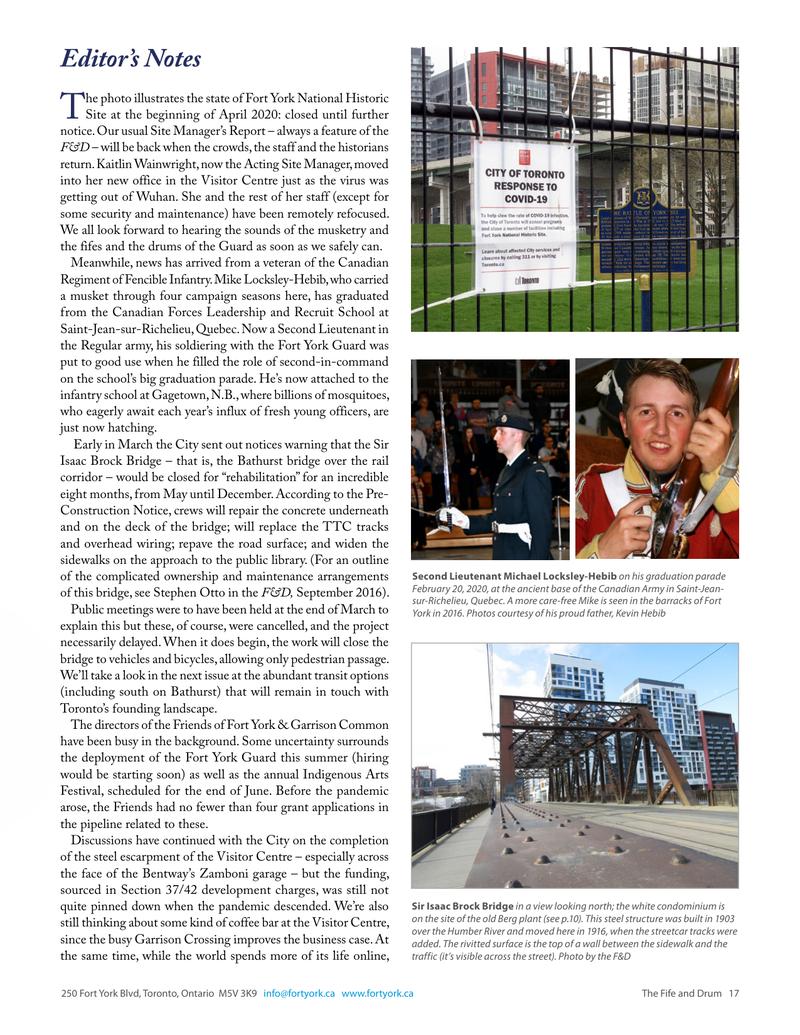
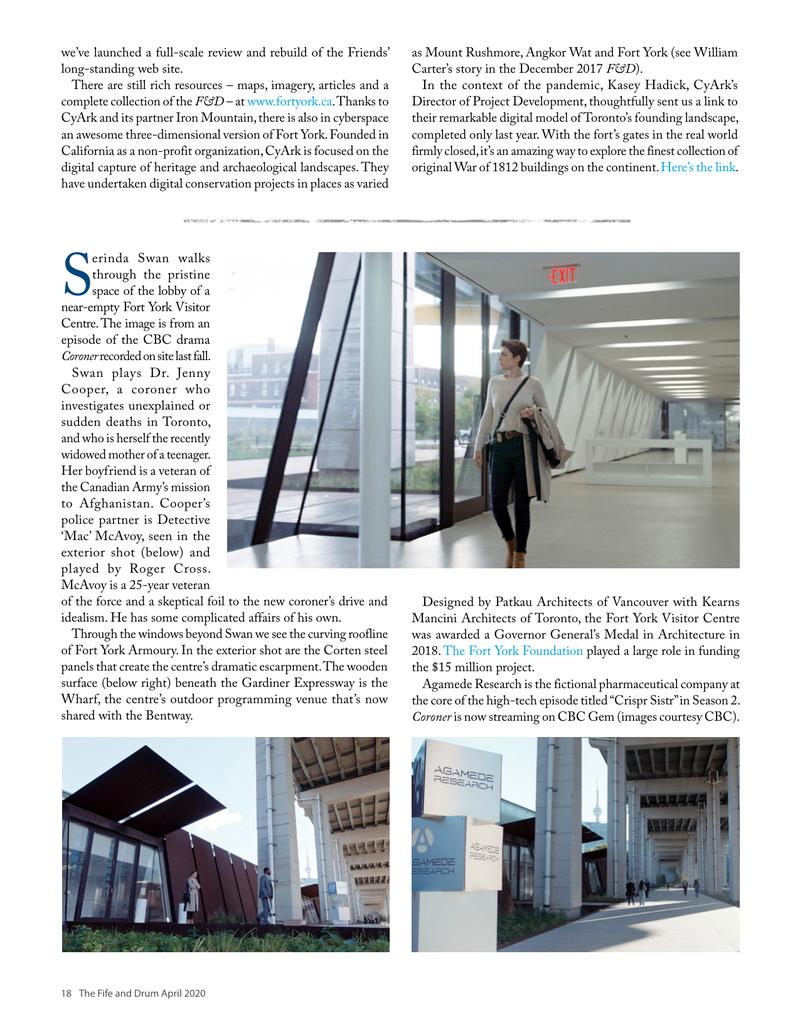
Signs of life are reappearing inside Fort York National Historic Site. Although the fort remains closed to visitors, site manager Kaitlin Wainwright and her staff were back in place in early July to begin planning the post-lockdown reopening. The Visitor Centre itself is a CampTO site for kids and it will stay in that role until early September. But a smaller version of the Fort York Guard is beginning its training and we’re hoping to see the redcoats of the Canadian Regiment of Fencible Infantry on Garrison Common early in August.
And speaking of the fort’s staff: the early days of the pandemic had scattered them far and wide, some of them taking assignments elsewhere in the City’s operations. Melissa Beynon, whose photos of the mouth-watering output of the fort’s culinary history program often grace our pages, stepped into the breach at Seniors & Long-Term Care. Kristine Williamson, who usually arranges visits of every kind, was temporarily a part of the 311 organization. Welcome back, everyone!
The Annual General Meeting of The Friends of Fort York was May 28 on Zoom. Given the corporate restructuring that was completed last year, this involved only the actual directors, that is, the members of the Board (listed below) and all were present. Don Cranston reported on the highlights of 2019, noting especially the Indigenous Arts Festival, the Fort York Guard and another four issues of our signature publication, your friendly Fife and Drum. No less than $142,500 were obtained from Ottawa and Queen’s Park and passed along to the comprehensive festival, which attracted to Fort York National Historic Site about 700 people a day and some 3,000 visitors on June 21.
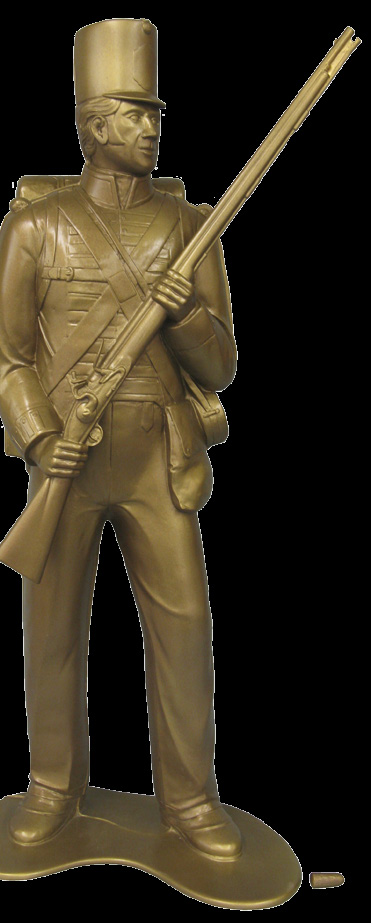
Last summer we had 18 students employed as soldiers or musicians of the Canadian Regiment of Fencible Infantry at a cost of $133,000, assembled through a combination of solicited grants, City contributions and income from our own long-term investments. The failure to obtain a Young Canada Works grant last year highlights the need to think harder about fundraising. The military history staff, meanwhile, worked as hard as ever – we mean our own Sid Calzavara, Scott Woodland and Anton Degiusti, and Fort York’s Kevin Hebib, Ewan Wardle, Colin Sedgwick-Pinn and Sam Horn – and the result was a first-place finish last year at the 20th annual field day at Fort George.
Don also pointed to the work of Ted Smolak and Chris Henry on our evolving web site, which in 2019 attracted nearly 80,000 visitors. Nancy Baines and Heather Cirulis were recognized for their steady work – interrupted only by the pandemic – in the fort’s Resource Centre. A substantial library in the War of 1812, First Nations and local history, military music and culinary history, it remains important to the interpretive work of the National Historic Site and the training of staff and volunteers.
The year also saw the retirement of some originals from the Board – Harriet De Koven, Pat Fleming and Mima Kapches – and an event to honour Friends co-founder Joe Gill. With the inclusion of the directors of the Fort York Foundation, we confirmed the Board of Directors of The Friends of Fort York and Garrison Common as: Don Cranston (Chair), Andrew Stewart (Vice Chair), Bruce Gooding (Treasurer), Jeff Evenson, Nancy Baines, Sid Calzavara, Chris Henry, Shawn Micallef, Scott Mullin, Anna Okorokov, Len Rodness, Suzy Rodness, Alison Rose, Ted Smolak, Neeraj Seth, Tyler Wentzell and Bob Kennedy.
The pandemic only briefly interrupted construction and so some capital projects at the fort are continuing. Work resumed in May on the necessary roofing project, which has seen beautiful new cedar shingles installed on all of the barracks and most recently on the East Brick Magazine; additional painting should be finished in July. The bad news, though, is termites: they’ve been found in the wood pile outside the garage, in the fraises on the north side of the entrance, in the built-up kitchen garden beds and in the hydro bunker. Monitors were installed throughout the site and thankfully the little blighters have not had the good taste to move into any of the historic buildings. Remediation work that could chew up more than half-a-million dollars is expected to start in September.
There’s some good news for David O’Hara, though: the fort’s former site manager has been given a Public Practice Award for 2020 by the Ontario Association of Landscape Architects. “Although still a long way from being over,” reads the citation, “David’s work and career have already left an indelible mark on Toronto’s public realm.” Andrew Stewart’s tribute covered that ground in the previous F&D and so we’re looking to David’s current projects: the increasingly difficult Rail Deck Park and a new master plan for the mid-century-modern landscape of Toronto Island Park. Congratulations, David, and good luck!
Lastly, some great news from the archives popped up in early July: the database of the rich Toronto History Museums artifact collection has gone live online. Everyone may now, as the site declares, “explore the City of Toronto’s online collection including 150,000 artifacts, 1.1 million archaeological specimens, and 3,000 artworks.”
The vast project’s driver has been the City’s own lovable historian, Richard Gerrard. “A museum collection – its development, research and cataloguing,” he told us, “is truly a long game.” Indeed, it began with 3×5 file cards and represents more than 70 years of archival cataloguing. For the digital effort, Richard credits colleagues Alex Avdichuk, Gabrielle Major and Tara Bowyer. The web site is uncluttered, searching is easy and efficient (unlike parent toronto.ca!) and many pictures – of that fraction of the collection that’s been photographed – are at a useful 300 dpi. Dive in here.

Original printed pages