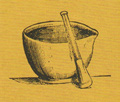
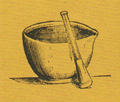
Wash and pare half a pail of potatoes, taking care to remove all dark specks; throw them into a vessel of clean water as you pare them, as they are apt to acquire a brownish colour, which spoils the white and delicate appearance of the bread. Boil the potatoes till reduced to a pulp, bruising any lumps smooth with a wooden beetle or pounder: it will then have the consistency of thick gruel; when cool enough to bear your hand in it, stir in as much flour as will make the mixture the thickness of thick batter; add a good handful of salt, and two cupfuls of your hop barm or any good rising that you may have.
A deep, red earthen pot, or a wooden pail, will be a good vessel to contain your sponge. It is a wise precaution to stand your vessel in a pan, as it is apt to flow over. If set to rise over-night, it will be risen time enough to work up in the morning early….
The quantity of sponge, above, will raise two large milk-dishes of flour, or about twenty pounds of flour. If you have a large kneading-trough, you can mix the whole at once, and knead it well and thoroughly: but if your trough be too small for convenience, divide your sponge, and make two masses of dough, working it very stiff on your board, scoring the top with a knife, and cover it up by the fire with a clean cloth, or you may make only half the quantity, using of course, less potatoes and water. In about two hours, or may-be longer, you will have a light dough, like a honeycomb, to make into loaves.
When baked, take your bread out of the pan, wet the crust of your loaves over with clean water or milk, and wrap them in a clean cloth, setting them up on one side against a shelf till cold. This plan keeps the bread from becoming hard and dry. For lightness, sweetness and economy this is the best bread I know, resembling really-good baker’s bread in texture and look. I cordially recommend it to the attention of the Canadian housewife.

Original printed pages