

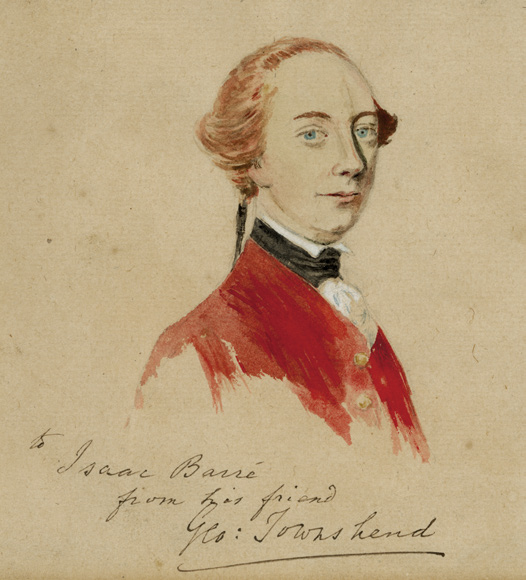
James Wolfe was born on January 2, 1727, into an upper middle class home in Westerham, Kent. It was a military family: his grandfather, father, an uncle and younger brother – his only sibling, who died of disease – all chose a career in the army. Edward, his father, retired as a lieutenant-general. His mother Henrietta was 18 years younger.
In 1741 James was commissioned into his father’s regiment of marines, moving to the infantry a year later. He was tall and thin, a red-haired 16-year-old when he first saw action – and was in the thick of it – at the Battle of Dettingen. The next 16 years proved him to be, in C.P. Stacey’s opinion, “an excellent regimental officer, a splendidly brave fighting soldier [but only] a competent battlefield commander.”
Talent, study and ambition, reinforced with patrons and the influence of his father, all helped James rise steadily in rank. He served on the Continent and in Scotland (he was present at Culloden) and, in late 1752, went to Paris for a six-month leave of absence, studying hard and enjoying life at the edge of the court. There were two women in his life: the first, who wasn’t wealthy, his parents disapproved; the second, Katherine Lowther, gave him a miniature of herself and a copy of Gray’s An Elegy Written in a Country Church-Yard, which he famously carried across the ocean to Quebec.
While much has been written of Wolfe’s victory there, the general’s character is more obscure and contentious. The latest book from the Champlain Society – “Your Most Obedient and Affectionate Son”: James Wolfe’s Letters to His Parents, 1740-1759 – sheds new light on the man who was Edward and Henrietta’s famous son. The excerpt below is from the editor’s introduction, and three complete letters begin on page 5.
Wolfe’s correspondence with his parents, which by definition was of a much more personal and intimate nature than his military correspondence, highlights a number of dimensions of his character and personality as well as aspects of his life that are of interest in rounding out the portrait that we have of him as an individual. The letters also take us beyond the high drama of his final moments on the Plains of Abraham and his subsequent mythologization, perhaps best exemplified by Benjamin West’s dramatic, inaccurate, and often reproduced painting The Death of General Wolfe.
I have no other entertainment, except … Letters from my Friends
Wolfe wrote to and received letters from his parents regularly, with the exception of a few gaps that were in some cases no doubt due to the pressures of his military duties. Apart from writing to his parents, it is also clear from references in his letters to them that he regularly corresponded with a variety of other individuals, from his uncle Walter Wolfe and close friends like William Rickson and George Warde, to Lord George Sackville and Guy Carleton. Writing, it seems, took up a great deal of his free time.
It is also clear that Wolfe, given his itinerant military lifestyle and postings to remote locations (particularly while he was stationed in Scotland), very much enjoyed receiving letters from his parents and others with news of home and of the wider world, including places like Nova Scotia and the new settlement of Halifax, where his friend Rickson was at one point serving, or Gibraltar. He highlighted the importance of this correspondence to him when he related that “I have no other entertainment, except such as is convey’d to me by Letters from my Friends.”
On those occasions when there was a lull in letters from his parents, he raised it with them and encouraged them to write more frequent and longer letters. In one charming note to his mother in 1751 he made it clear how much he enjoyed hearing from her: “I say your Letters because I hope to hear from you every now & then; you may be as short, or as long, as you please only remember that one side is very agreeable, but four, is four times as agreeable, & so in proportion-.”
Wolfe was not alone in his letter writing, or in his appreciation of them. The eighteenth century has been referred to as “the great age of letter writing” and was marked by the expansion of postal routes, the production of “how to write” manuals for letter writing … and the emergence of the epistolary novel as an extremely popular genre. Also significant in terms of Wolfe’s personal correspondence was the observation made by one scholar that “Personal (or familiar) letters were commonly connected in the 18th century with ideas of sincerity and truth. Addison and Steele observed in their popular periodical, The Spectator, that “there is nothing discovers the true Temper of a Person so much as his Letters.” Another scholar has affirmed that letters were a means through which middle-class families could pursue “polite self-improvement” and “affirm sentimental bonds in private life.” This latter point was particularly significant for Wolfe.
The first and most obvious dimension to assess in reviewing his letters is the nature of Wolfe’s relationship with his parents. His letters make it clear that he was a very conscientious and devoted son. He wrote to them frequently and enquired as to their health and welfare, and, particularly, it seems, to that of his mother. The words “Your most obedient and affectionate son” were not simply a standard formulation for him but a true reflection of his love for and devotion to them.
He expressed this sentiment repeatedly in his correspondence with them. In 1749, for example, he wrote, “I have as great a desire to make returns, for your Tenderness & Friendship, as I have to pay reverence to your Parental Authority, & both are very prevalent in my disposition. In short, I have a lasting remembrance of what I owe you both in duty & gratitude; & am always concernd when you have any reason to think me forgetfull.”
Perhaps at no time was this concern more apparent than when he repeatedly urged his parents to invest in a small income-producing property as tensions with France rose, so that if the public finances were adversely affected by a war, his mother would have a secure income-producing asset to fall back on. He repeatedly raised the issue and he felt strongly enough about it to take it up directly with his father [see page 5].
Not surprisingly given his regard for them, Wolfe sought the approval and good opinion of his parents and expressed great remorse on those rare occasions when he felt that he had in some way transgressed, the best example of which was in the passage from a letter to his father in which he apologized for his conduct in the winter of 1750–51 when he was on leave in London and threw himself into a dissolute lifestyle. He also had a “warmth of temper,” which on occasion broke out in his letters, and for this too he was apologetic: “I am not in my nature dispos’d to plague & torment People, & more especially those I love; my temper is much too warm; & sudden resentment forces out expressions, & even actions, that are neither justifiable nor excusable- & perhaps I do not correct that natural heat so much as I ought to do.”
While Wolfe demonstrated devotion and affection for both of his parents, there were significant differences in terms of the content of the letters that he wrote to them. When writing to his father, Wolfe was more reserved and generally confined himself to political and military happenings, the activities of senior officers with whom they were acquainted, and issues related to his advancement within the army and the support of patrons. On occasion (and sometimes, it seems, with the help of his mother), and when particularly hard-pressed, he also reluctantly broached the subject of financial assistance with his father.
This choice of subjects may have simply been a reflection of his father’s age and outlook, which Wolfe ultimately resigned himself to. On one occasion, however, he seemingly chides his father for not having more to relate in his letters (which again indicates how much he appreciated receiving them) and provides his view of the difference in this respect between men and women:
In a very little while I shall contract my letters to the ordinary dimensions of your’s; as a body grows older, the imagination grows cold, & the mind is more intent upon business, because more interested; and so, when there is nothing to transact; one has nothing to say. Long letters take up a great deal of time, & signify little, except to Lovers; or when they treat of grave matters that needs much explanation; a few words will discover ones condition, & invite a like return: I have seen letters from Ladies, a mile long; but they have an ease in writing that the men want, & they can cut entertainment out of nothing.
With his mother, however, the tone of his letters was far different, and Wolfe wrote much more intimately about his innermost thoughts and feelings. In them, he reveals an intensely introspective, almost lyrical, view of his circumstances that appears as something of a student of the human condition, as in this passage from a letter to his mother written while he was stationed in Inverness in the winter of 1751:
The winter wears away, so do our years, & so does life itself; and it mat-ters little where a man passes his days, & what station he fills, or whether he be great or comfortable… The little time taken in, for meditation, is the best employ’d of all our Lifes, for if the incertainty of our State, & being is then brought before us, & that compar’d w th: our course of con-duct, who is there that wont immediately discover the enormousness of his behaviour & the Vanity of all his pursuits? & yet we are so mixd, & compounded that tho’ I thus occasionally this minute, & lie down w th: good Intentions; it is likely I may rise with my old nature or perhaps with the addition of some new Impertinence, & be the same wandering lump of idle Errors, that I have ever been.
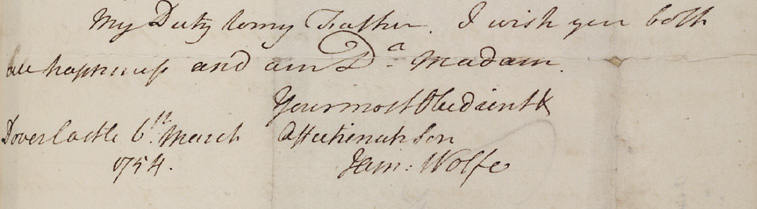
Perhaps most poignantly, on a number of occasions he also speculated (presciently as it turned out) as to what the nature of his eventual fate as an army officer might be. One such allusion, along with a description of his sense of the nature of the duty he owed to his king and country, was contained in a letter to his mother from Exeter in 1753:
I am determin’d never to give myself a moment’s concern, about the nature of the duty, which his Majesty is pleas’d to order us upon; & whether it be by Sea or by Land, that we are to act in obedience to his commands; I hope we shall conduct ourselves so as to deserve his approbation; it will be sufficient comfort to you two (as far as my Person is concern’d) at least it will be a reasonable consolation, to reflect, that the Power which has hitherto preserv’d me, may if it be his pleasure, continue to do so; if not, that it is but a few days, or a few years more, or lefs- & that those who perish in their lawfull imployment, & in the service of their Country, die honourably; I hope I shall have resolution & firmness enough to meet every appearance of Danger, without great concern- & not be over sollicitous about the event.
This seeming nonchalance with respect to the dangers associated with his profession and the fate that might await him is very much in keeping with what one historian has referred to as the equanimity and self-government associated with notions of “polite masculinity” at the time. These qualities figure prominently in Wolfe’s writing and formed an important aspect of his character.
Sources & Further Reading
Wolfe’s letters to his parents were acquired by the Fisher Rare Book Library in late 2013 from Christie’s auction house in London. They had been held by an undisclosed British family in Westerham since his mother, Henrietta, died in 1764. The letters are leather-bound in a single volume that has, as the catalogue says, “endleaves of cream wove paper with three of General Wolfe’s red wax seals set into a recess.”
There was substantial resistance in England to their leaving the country – the letters were said to be some 70% of Wolfe’s extant correspondence – but no one could be found with pockets deep enough to make a successful bid. In Toronto, Christie’s mentioned them to the university and serendipity provided a principal donor: Virginia McLaughlin, through Helmhoist Investments. With help from an obscure federal agency, the University of Toronto library itself topped the winning bid to just under $1.5 million (see The Globe and Mail, 18 Nov. 2013).
They are joining Wolfe’s own 1754 edition of Thomas Gray’s Elegy Written in a Country Church-Yard – the one Katherine Lowther gave him; the note he set sail for Quebec, and in which he wrote his own pensive notes. This gem was acquired by the Fisher in 1988 for just over $300,000. Elegy and the letters are only the core of the library’s extensive holdings of Wolfe materials.
The general’s letters to his parents have long been known to historians. They were first used by Robert Wright, his first serious biographer, in The Life of Major-General James Wolfe Founded on Original Documents (1864) and then by Beckles Willson in The Life and Letters of James Wolfe (1909). Both authors, however, were liable to excise passages regarded as indelicate or especially uninteresting. There have been copies in the Canadian national archives since 1913. The Champlain volume’s aim is “to reproduce the selected letters as fully as accurately as possible” from the manuscripts, including by retaining Wolfe’s spelling and abbreviation. Of the 229 letters from Wolfe in the Fisher volume, 209 are printed here; the rest are mainly short notes on details found elsewhere.
About letter-writing and the middle-class pursuit of “polite self-improvement” – and how letters were seen to “affirm sentimental bonds in private life” – find Louise Curran, “Letters, Letter Writing and the Public-Private Divide in England, c.1660-1800,” in Konstantin Dierks in Papers of the Bibliographical Society of America (94/4). To pursue the concept of “polite masculinity” see Karen Harvey, “The History of Masculinity, c1650–1800,” in the Journal of British Studies (44/2).
The first brief biographies of Wolfe tended little more than hero-worship. Wright’s full-length work of 1864 was more restrained. Francis Parkman’s Montcalm and Wolfe in 1884 conceded that the Englishman’s “nature was a compound of tenderness and fire, which had sometimes showed itself in flashes” without allowing this to diminish the hero’s victory. In 1928, McGill professor W.T. Waugh published James Wolfe: Man and Soldier (beautifully designed by Thoreau MacDonald), and while adding recently discovered sources, he remained sympathetic. Wolfe’s reputation as both a commander and a man suffered considerably during the twentieth century. Eight years after Waugh’s biography, his colleague at McGill, E. R. Adair, delivered a paper to the Canadian Historical Association on “The military reputation of Major-General James Wolfe” that, immersed in the roiling intellectual atmosphere of the 1930s, began the re-evaluation of the commander. Although considered “somewhat overdone” by C.P. Stacey, its conclusions – that Wolfe was cruel and indecisive – have since influenced many writers. Pointing to Wolfe’s vigour and success at Louisbourg, and his daring ascent at Quebec, the present Champlain volume is less critical of the commander and more insightful of his character.
The trajectory of Wolfe’s reputation is traced by Stephen Brumwell in the introduction to his excellent biography, Paths of Glory: The Life and Death of General James Wolfe (MQUP 2006). Stacey has treats its reputation and reviews the primary sources in the bibliographical note to his article on Wolfe in the Dictionary of Canadian Biography (Vol.III).
Portraits of Wolfe are discussed in J. Clarence Webster’s charming Wolfe and the Artists: A Study of his Portraiture (Ryerson 1930), updated by Wolfe: Portraiture and Genealogy published by the Quebec House Permanent Advisory Committee in 1959. His many portrayals are placed in their cultural context by A. D. Harvey, in “Wolfe, The Death of General Wolfe and the Arts in the Eighteenth Century (MQUP 1997).
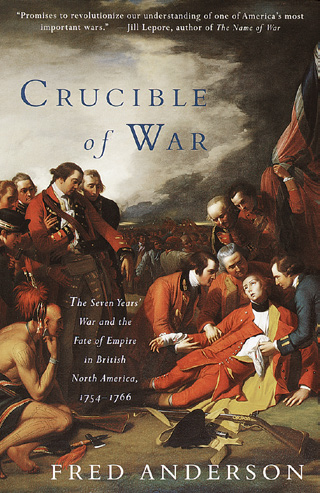
Two modern descriptions of the final battle stand out. C.P. Stacey’s own military account, Quebec, 1959: The Siege and the Battle, first published by Macmillan in 1959, has been thoroughly updated by Donald Graves and the Limner Brass Studio (2014). And D. Peter MacLeod, an historian at the Canadian War Museum, makes wonderful use of first-person narratives in Northern Armageddon: The Battle of the Plains of Abraham (Douglas & McIntyre 2008). The standard modern overview of the war on this continent is Fred Anderson, Crucible of War: The Seven Years’ War and the Fate of Empire in British North America, 1754-1766 (Knopf 2000).
Original printed pages


